Showing posts with label SDG13. Show all posts

Friday, 5 June 2026

Protect Our Environment: For Our Future

 If May was about biodiversity. June is all about ecosystems. As mentioned in the previous post the theme for World Environment Day 2026 (WED2026) is

Inspired by Nature.

For Climate.

For Our Future.

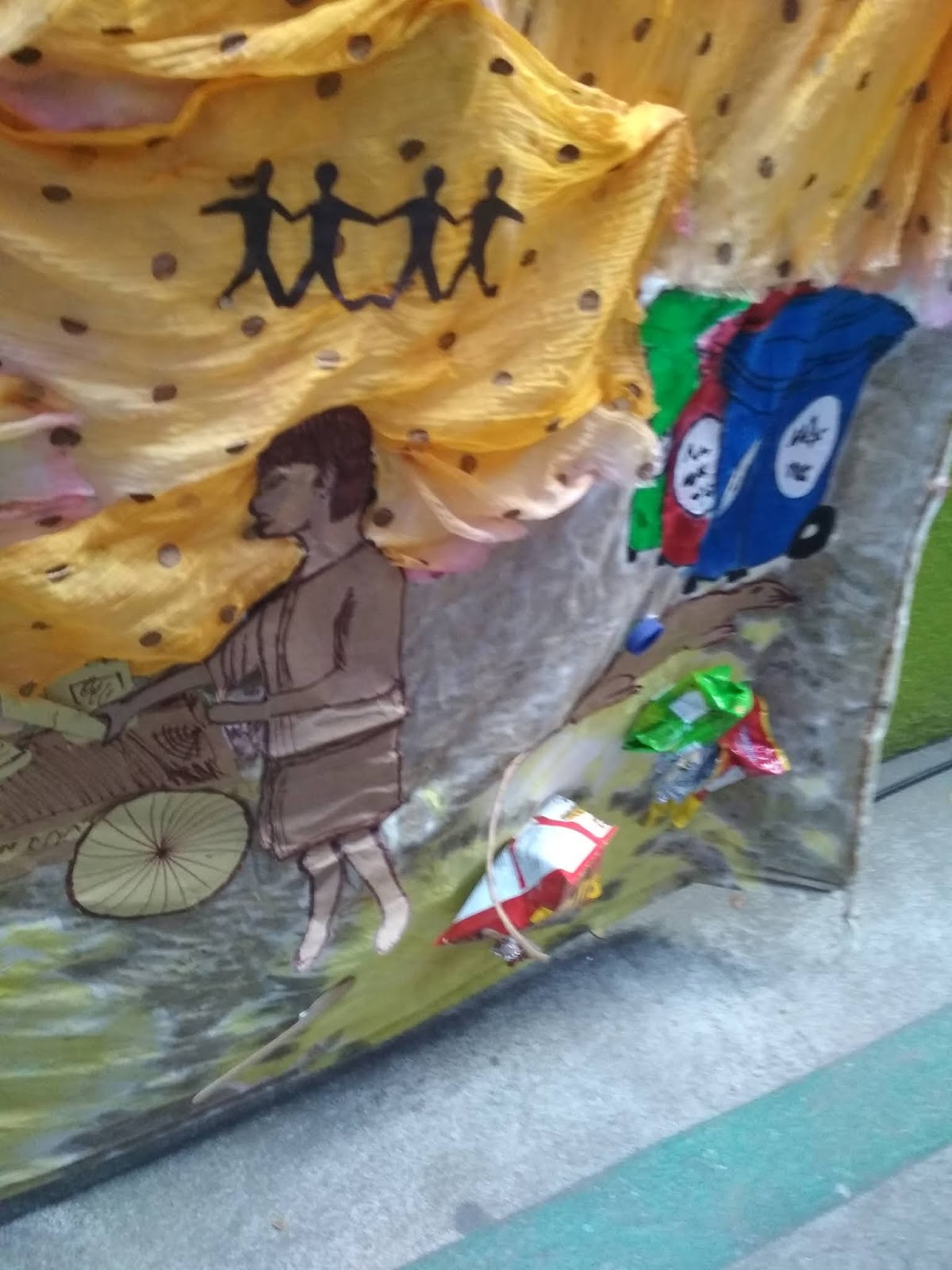
Source: Meraki By Me, Raakhee, 5 June 2026.

Protecting Our Environment

The month of June while observed as Orca Awareness Month (All About Killer Whales) otherwise has an enhanced focus on the ecosystems that support the biodiversity that's celebrated through May. 

Between World Bicycle Day (June 3rd, "Cycling into a Greener Future," 2026 theme), Environment Day (June 5th), Ocean Day (June 8th), International Day to Combat Desertification and Drought (June 17th), the Summer Solstice (also observed as Yoga Day, where Surya Namaskar a.k.a. Sun Salutations from India in the Northern Hemisphere is vital to the ancient practice and the sun too reaches its exaltation over the Tropic of Cancer running through the heart of India with two Sun Temples in the East and West along the latitude), and Rainforests Day (June 22nd), the focus is firmly on the ecosystems and environment that supports life and livelihoods. 

The time is now. Action is necessary urgently as security risks abound in India, South Asia and beyond due to climate change and the heating planet supercharging weather phenomena such as the El Nino. The UN Secretary General Antonio Guterres himself took time out to mention the impending climate disasters likely triggered by the Super El Nino as warned by the World Meteorological Organization: 


While our Sustainable Development Goals (SDGs) are environment coded, protecting our planet in the quest to truly progress is all about putting people, planet, progress and profits in the same page of the plan of action. 

As mentioned by internationally recognized voice from the Global South for the environment, Centre for Science and Environment's (CSE) Sunita Narain in her insightful analysis ahead of WED2026 in the CSE publication Down To Earth, inclusive growth and sustainable development in modeling our growth story is vital to protect our environment: 


Inclusive plans of action and an intersectional lens are vital features of true environmentalism. The effects of the climate crisis are gendered and classist hence the process of protecting our environment needs to voices of women, girls, minorities and the marginalized, with a responsive ground up, grassroots grown approach.


For Our Future 

Nations are institutions are doing quite a bit to protect our environment "for our future," but a lot more needs to be done. 


The pace of destructive activity and our crude oil addiction outpaces conservation and restoration efforts and the mainstreaming of renewable energy sources.  


Ecofeminism is needed as the growth model now more than ever. Gender Equality (SDG5), Reduced Inequality (SDG10) and Peace, Justice and Strong Institutions (SDG16) are all vital to Climate Action (SDG13) and the path to Just Transition and robust environmentalism. 

Meanwhile, as an individual, this environment day and beyond you can track your personal carbon footprint (Check out OnlyPlanet.in) and find means to shrink it to reduce your impact on the environment in order to protect it ... for our future. For, to quote the immortal Jane Goodall, 

"Every single one of us makes an impact on our planet every single day and we can choose what kind of impact we make."

Thursday, 28 May 2026

Ecomodernism in the lead up to Environment Day 2026

 After a May focused on celebrating biodiversity in its many forms, the main focus in June will be Environment Day, observed on 5 June 2026. 

The theme for World Environment Day 2026 (WED2026) is 

"Inspired by Nature. For Climate. For Our Future."

WED2026 is hosted by Azerbaijan. 

Personally I have found the environmental philosophies of Ecomodernism, Ecofeminism and a future reimagined as "Solar Punk" most in-line with the theme of #WorldEnvironmentDay2026. The theme of Environment Day as well as the ecology-centric worldviews of  Ecomodernism and Ecofeminism put the Sustainable Development Goals (SDGs) and Circularity at their hearts. An ecology-first approach with an intersectionalist lens is central to reimagining a regenerative world. 


What is Insersectnality?
(See explainer video below)

Ecomodernism 

"Ecomodernism is an environmental philosophy arguing that human technological development and economic growth can—and should—be harnessed to protect nature and improve human wellbeing. At its core, ecomodernism focuses on 'decoupling', a process meant to separate growing economic prosperity from environmental damage. This is primarily achieved through 'land sparing'—intensifying human activities like food and energy production on less land, which leaves more space for natural ecosystems to thrive."

If I have reservations about ecomodernism its the approval of nuclear power, synthetic fertilizers, genetically modified crops and urbanization in the quest to concentrate civilization and let ecology thrive in silos. See the YouTube Shorts summary (10 Cool Facts!) below: 


Ecofeminism 

Ecofeminism was introduced in Carolyn Merchant's 1980 book The Death of Nature: Women, Ecology, and the Scientific Revolution. It calls for knowledge with an ecological ethic of care instead of dominance. A return to a mode of development in partnership with nature, respecting it as living systems instead of machines to be controlled and dominated. See the explainer YouTube shorts below: 


Solarpunk 

"Solarpunk a literary, artistic, and social movement that envisions a sustainable, optimistic future where humanity lives in harmony with nature. It blends advanced renewable technology (the tech, SDG 7: Affordable and Clean Energy) with ecological awareness, actively rejecting climate doomerism in favor of community-driven, post-capitalist solutions (punk resistance to neocapitalism, neocolonialism & neoliberalism, et al. a.k.a. “Empire,” as Arundhati Roy puts it)"


Electric Bus launched in Indian Metros & Solar Ferry in Kochi's (Keralam) backwaters.


One of  the facilitators from my South Asia fellowship with Climate Tracker a decade ago (2016), Renee Karunungan from The Philippines, now based in United Kingdom shared how she has solarized her home and electrified her transport with UK government subsidies.  


Beyond Environment Day: For Our Future

Meanwhile my classmate, Venkatesh R. highlighted the plans for going 100% Off-Grid in India in his post on Medium as the Ground Truth Architect.


With the heating Pacific Ocean and predictions of a Super El Nino bound to mess with my city, Chennai's monsoon season (Northeast Monsoon), Venkatesh 'the Ground Truth Architect' also highlighted low-cost retrofits of the city's existing storm drains and rainwater harvesting systems as well as the introduction of porous roads in low-traffic areas and parking as well as bioswales in place of medians on highways. Thus reimaging the Greater Chennai Metropolis as a sponge city. 


Inspired by Nature: Biomimicry & Beyond

Video: Sponge City: Chinese Style

Inspiration from nature is a way of working in partnership with it for people, planet and profits. This can be as simple as growing your kitchen garden to encourage symbiosis or can go up to inspiration for tech to clean up the messes of over-consumption, capitalism, neocolonialism and neoliberalism.


For Climate: For Our Future

Beyond consumption for consumption's sake, living under the cloud of planned obsolescence as we are, we need to embrace the tenets of the circular economy models and sustainable development to live in harmony with nature. 


And however we design solutions, we must remember to hold an intersectional lens up to the problem to solve it holistically and regeneratively! 


Saturday, 11 December 2021

South Asian Perspectives on Sustainable Mountain Tourism: International Mountain Day 2021

The hills are calling but when we answer the call sometimes we find the popular mountain tourist destinations full of trash and traffic. Invariably what's popular in these places are big-chain hotels, big-chain souvenir shops and super-markets. As a result a very small fraction of the tourist money trickles into the pocket of locals who bear the tax burden and inconvenience of living in a congested and trashed tourist mountain haven. Thus, in this gap between COVID waves as people flock to mountain escapes is an apt time for the theme of International Mountain Day 2021 to be Sustainable Mountain Tourism.


 So what is Sustainable Tourism?

Sustainable tourism is defined by the UN Environment Program and UN World Tourism Organization as “tourism that takes full account of its current and future economic, social and environmental impacts, addressing the needs of visitors, the industry, the environment and host communities.” 

So how is this operationalized: Stay in local homestays and non-chain locals-owned hotels, buy souvenirs and local produce from the locals and commit to be a responsible visitor. See more on eco-tourism in this article by Ramala.

When we ensure sustainable tourism in the hills, hill stations and mountain-top tourist paradises, we ensure that leave behind only footprints and pleasant memories with their mountain hosts. This ensures that tourism there achieves a range of sustainable development goals (SDGs): 

SDG8 - Sustainable livelihoods enshrined in the  principles of sustainable tourism ensures Decent Work and Economic Growth in the mountain destination. 

SDG11 - the organization of a Sustainable Community supported by sustainable livelihoods generated by responsibly used tourist money.  

SDG12 - Responsible Consumption and Production of resources in the hill-top tourist draw. 

SDG13 & SDG 15 - Through Sustainable Mountain Tourism which puts protecting the tourist spot's environment and making a conscious effort to reduce the ecological and carbon footprint of the presence of tourists there even as the tourist money flows into local pockets and institutions that sustainably develop, protect and restore the sensitive mountain ecosystem achieves both Climate Action and champions Life on Land.
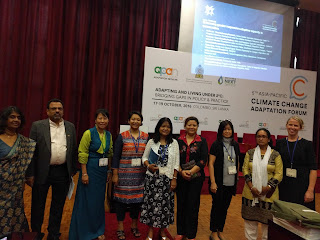


Former mountaineer, Ms. Tshering Uden Bhutia is a community leader from West Sikkim. She works with the community organization Khangchendzonga Conservation Committee (KCC) to promote eco-tourism in Sikkim, particularly in the trails leading up to Kanchenjunga, the third highest peak in the world and sacred to the both countries it straddles (Nepal and Sikkim in India). Uden and KCC have promoted Sustainable Mountain Tourism in Sikkim which has helped build resilience and create a sustainable community with sustainable livelihoods in the Himalayan state through a wide variety of activities. Uden has represented her state and organization in many fora but the APAN forum (5th Asia Pacific Climate Change Adaptation Forum in Colombo, Sri Lanka, October 17 to 19, 2016) was her first international venture.  She part of the panel in the parallel session “Enhancing Gender Responsive Adaptive Capacity in Communities” on the last day of APAN 2016.

  The social entrepreneur from Yuksam in West Sikkim, Uden has been involved with sustainable livelihood projects and waste management for over twenty years and her efforts are embody the core principles of Sustainable Mountain Tourism, the theme for International Mountain Day 2021 (December 11) . Her love of the mountains translated into community leadership. She hails from the Himalayan state of Sikkim, in a district at the base of the sacred and majestic Kanchenjunga. And leads the Khangchendzonga Conservation Committee (KCC) which “comprises of community representatives, community based organization and other key stakeholders highly committed toward nature conservation.”

In her childhood Uden’s family tearoom served varieties of dishes using Maggi 2-Minute Noodles. And over her lifetime she witnessed the noodle wrappers take over her home. While climbing the peaks as well the debris consisted of food wrappers. Instant noodles and other instant foods cooked with just hot water are a great convenience for mountaineers and for people cooking in the open.  It is used everywhere and is the fast food of choice as it is both easy to carry and easy to cook. Yet the plastic wrappers leaves a non-biodegradable wake behind tourists, trekkers, and mountaineers for only a fraction committed to “leaving behind only footprints.”

Since 1997, as a personal contribution to reducing waste she decided to avoid Maggi products and the like.  She made her own instant noodles and carried it in reusable containers that she brought back, without littering in her wake. She opted for fruits and nuts to processed foods and though it was hard and sometimes expensive – and literally extra baggage, she developed and fully committed to the pro-planet habit.  For as the KCC website puts it,

Conservation cannot happen with an empty stomach, hence KCC strongly believes in providing livelihood support to mountain people and facilitating them for alternative livelihood with minimum impact on nature and the rich culture, thus creating a win win situation among nature and its people.

KCC conserves natural and cultural resources through skill development programs, micro planning, awareness campaigns, monitoring of natural resources as well as by advocating for appropriate policy changes. Through KCC and other community level activities Uden now has more waste management, reducing, reusing and recycling programmes. The habit turned into a job creator and in turn she and other community leaders build pro-planet skills and capacities through training, exposure and other participatory means.

Source: http://www.redelephantfoundation.org/2017/01/being-pro-planet-taking-personal.html

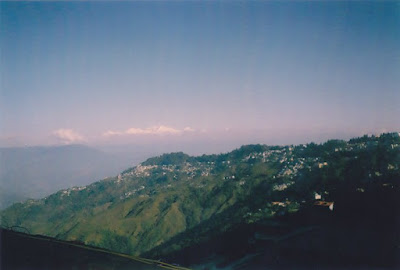
View of the snowy peaks including Kanchanjenga from the hill-station Darjeeling, West Bengal 2010 (My Mum's photography).  


Coming from a coastal tropical metropolis (Chennai, Tamil Nadu, South India) I travel to mountains to experience a different ecosystem to my usual urban, coastal and hot one with limited wildlife and biodiversity. I also heed the call of the mountains to experience the beauty of the night skies, the thrill of experiencing snow fall and finding a cozy rest stop in the cold clime and enjoy the famed hospitality of communities from hills and their unique and delicious cuisine. For this reason I prefer homestays, engaging local guides to take us to the tourist spots and the little-known pristine spots teeming with all things wild before shopping and eating in local markets and eateries for an authentic experience that also puts my money in the hands of the hill-station's residents.

These are Indian perspectives, I asked a few people in the hospitality and travel sectors in hill stations in other parts of South Asia and they came through with great insights:

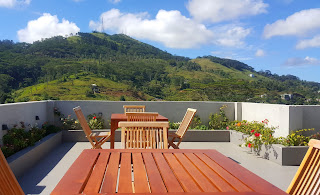
View from the rooftop, Idyllic Vista (indeed!), Kandy, Sri Lanka

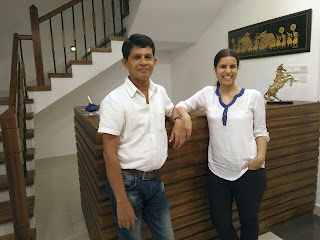
Devika Fernando, Author & Innkeeper along with her husband Thushara Fernando from Kandy, Sri Lanka had this to share: 

“Kandy is a city surrounded by hills and mountains. Naturally, that means some guests want to go on hikes. Our inn is situated high up in Hanthana so it's a good starting point. Sustainable tourism in the mountains is something that's close to our hearts. My husband and I always advise our guests not to leave any trace of themselves behind - that especially means no littering! Not taking anything from the ecosystem back with them is just as important. Nature should be observed, not disturbed. Staying on the hiking trails is advisable too, for the tourists' safety as much as for all the animals that call these misty mountains their home.”

*

View from the window, Gilgit-Baltistan

Syedda Ramla the mompreneur from Gilgit-Baltistan, quoted on her eco-tourism article before had this to share: 

"My name is Syedda Ramla and I own BetterBonds, an online shop for 'Himalayan Medixine' which is my modern take on traditional healing with plants, crystals and honey. I make gemstones jewelry and herbal tea and balms. We are at http://instagram.com/betterbonds. Hit us up!

 I migrated to Gilgit-Baltistan from the coastal Karachi in 2013. What pulled me was the quest to experience and observe an earthy, handmade life that was ecologically integrated. I was fascinated by handmade homes, a connection with cattle and produce, a high dependence on seasonality, and the opening of the Self to the elements. I admit, I also love the thrill of living on the edge; I love what it demands of our person and psyche. I passed some tests and failed others.

 For those who are on such 'soulular' quests, this region can provide one of the last few such remaining opportunities on our otherwise rapidly modernizing and gentrified Earth. But I warn you, this place, too, is changing and that is why we need more of those travelers who think in sustainable and earthy ways. That to me is the true potential of the place.

 Unfortunately, unlike the rest of Himalayan nations and regions, Pakistan is still not seeing this opportunity fully or comprehending the nuances of it. We still have a police state approach, we still give tourists the stink eye and ask: "Why are you here? Why are you traveling? Why aren't you back home with your Momma?" I have seen this too many times to be comfortable in pretending it is otherwise.

 On the other hand, Nepal and India for instance wholly grabbed the hippie movement, for instance, by the horns and steered it fairly usefully. As a result a whole counterculture was born, and tourists are attracted in hordes to those regions. We are still behind. There is favoritism for Whites. Our local tourists are neither informed nor regulated.

 I would wholly advocate a restricted tourism approach to protect ecology: Issue a number of passes per year, and make economy options available. Brief people well. Grab the moment and speak to them about environmental concerns, make it mandatory to run a drill on each bus' communication system, make it pleasing. Why not? This is entirely possible.

 Finally, folks, come here for Autumn and come well-prepared. The goldens, browns, reds, last greens on the trees are lovely. The angles of sunlight are ephemeral as seen in the above picture from my home a few days ago (December 2021)."

So remember, next time you heed the call of the mountains, tread lightly, ecologically speaking and travel responsibly and leave the paradise, if not better than you found it at least as wonderful as it was when you got there!

Wednesday, 27 October 2021

From COP15 to Climate Action Day to COP26: October Musings

 The big deal in October 2021 includes two environmental conference of parties (COP) separated by the first ever Earthshot Prize ceremony and the International Day of Climate Action. 

Between the two avenues for rhetoric the finalists and winners of Earthshot Prize with their innovative solutions for the problems that plague our planet offer hope in this the first year of the UN Decade of Ecosystem Restoration. They are icons to be celebrated o f the Day of Climate Action and beyond in order to bridge the climate rhetoric-climate reality divide.


The first COP to occur in October was the first part of the Biodiversity COP15 that took place online between October 11th and 15th, online among the parties to the Convention on Biological Diversity. With China as chair, this was a forerunner to the second-part of the COP15 - the in-person session scheduled to happen in Kunming between April 25th and May 8th 2022. With the Chinese premiere giving the Climate COP in Glasgow beginning on Halloween 2021 a miss, this Biodiversity COP15 was where China flexed its environmental muscle. With the 6th Mass Extinction and immeasurable and irreplaceable biodiversity loss being part of our reality, made worse by the nightmare of the climate crisis manifesting the world over with particularly devastating effects in the poorer, island, coastal and tropical parts of the world, the need to act to protect biodiversity and address climate change is existentially vital. Thus it makes sense that in between the two COPs on October 19th, the million-pound Earthshot Prize ceremony to honor the 5 climate heroes - Eco-Oscars as it were, was hosted by the Duke and Duchess of Cambridge in Alexandra Palace, in London. This competition for the Royal Foundation's five million-pound prizes was launched mid-pandemic in 2020 by Prince William to give Earth a shot in the arm and address five critical issues and the five winners addressed these innovatively and effectively 

(1) 'the restoration and protection of nature' - Costa Rica, (2) 'air cleanliness' - Takachar, India (3)  'ocean revival' - CoralVita - Bahamas, (4) 'waste-free living' - The Food[Waste] Hubs of the City of Milan, Italy & (5) 'climate action' - Hydrogen producing Enapter's AEM electrolyser (Thailand, Germany, Italy).


Key takeaways from the Online UN Biodiversity COP15 include world leaders acknowledging certain facts but not taking much action: 

(1) As Nature's Decline Threatens Humanity, We Must Work to Reverse Biodiversity Loss; (2) Post-2020 Global Biodiversity Framework: Understanding the Scope and Scale of the Biodiversity Crisis; (3) Kunming Declaration - a commitment to protect 30% of land and sea area by 2030 [30-30] (4) Gap between promises of biodiversity protection and any real or effective climate action (5) Need for Global Biodiversity Fund. The difficulty in actually achieving the much needed 30-30 protection in the face of so-called "economic realities" - the pandemic-fuelled global economic slowdown and resultant domino of energy crises and economic crisis that put environmental crises on the back burner even though it costs nations billions of dollars they can't afford. 


Case in point, according to a World Meteorological Organization report, the natural disasters in 2020 cost India $87 billion, i.e., ₹65 Lakh Crores.

As I predicted in my article for the Chennai Centre for China Studies (C3S) in September, not much can be expected from COP15 in the face of geopolitical and human security concerns. The main agenda of COP15 included positioning China as an environmental force to be reckoned with, showcase of Chinese success stories in biodiversity protection and its Red Line Plan as well as paving the way for a much-needed multi-billion dollar Global Biodiversity Fund even though it will take a long time for countries to make and honor these commitments. 

With these gaps in rhetoric and reality in mind, perhaps it becomes clear why the International Day for Climate Action 2021, October 24th, doesn't have the same prestige or reach of say Earth Day or Environment Day. The Fridays for Future movement is more impactful. and in a way as long as there is real climate action, it doesn't really matter if we celebrate the Day of Climate Action widely or not! And this is where it is hoped that the Climate COP26 to be held in Glasgow between October 31st and November 12th will make a dent in ensuring that world leaders and corporations commit to climate action and limiting carbon emissions. The real scary thing on Halloween 2021 will be the cost in emissions and money that the world is spending on what many believe is an eye-wash of a "greenwashing" conference hoping for a better outcome!

So ahead of COP26 here's a checklist to keep in mind while assessing the Climate COP26 that begins on Halloween: 


Saturday, 25 September 2021

Act on SDGs: Turn It Around

 Six years into the Sustainable Development Regime, on this the Global Week to #Act4SDGs, I, Raakhee Suryaprakash from Chennai, India, am using the platforms of my initiatives Sunshine Millennium and Re.Plastic  (https://www.facebook.com/Re.Plastic10) to showcase and #Amplify @SDGActions from around the world. I am communicating about and sharing #SDG best practices to #TurnItAround on Action on the Sustainable Development Goals. 

Through my initiative Sunshine Millennium, I amplify successes in the fields of #SDG7 - Affordable & Clean Energy, #SDG13 - Climate Action, #SDG11 - Sustainable Cities & Communities, #SDG6 - Clean Water & Sanitation as well as the SDGs 14 & 15 -#LifeBelowWater & #LifeOnLand - basically biodiversity conservation.

With my initiative  REplastic I amplify #SDG8 #SDG9 & #SDG12 for I believe responsible plastic waste management and controlling plastic production combines aspects of #innovation & responsible consumption and production while yielding #DecentWork and #EconomicGrowth.  


Tuesday, 2 February 2021

Wetlands & Water: World Wetlands Day 2021

 Wetlands sustain life. Wetlands protect life. The day of adoption of Ramsar Convention protecting wetlands, February 2nd, has since been celebrated as " World Wetlands Day." The 2021 theme is Water and Wetlands both vital for survival and both used up as urban centres sprawl to take up what used to be vital wetlands that have sustained life and livelihoods for centuries.


According to the Ramsar Convention, the inclusive definition of Wetlands is as follows:

“…wetlands are areas of marsh, fen, peatland or water, whether natural or artificial, permanent or temporary, with water that is static or flowing, fresh, brackish or salt, including areas of marine water the depth of which at low tide does not exceed six metres."

This inclusive definition is important in the quest to protect what's left of the wetlands - these teeming biodiversity hotspots because so many cities - metros and capitals have been built on or around what used to be massive wetland systems. 

Dismissed as "swamps," drained of water and later pumped full of concrete our "urban planners" of the past have created water scarce cities that are ironically flood prone as well. As the cooling water, flora and fauna of the marshes were replaced by concrete cities urban heat islands flourished negating the wetland carbon sinks and adding to global warming and the climate emergency.


Last year, the Ramsar-Bonn connect was highlighted just before the pandemic ground the world world to a halt, at the 13th conference of parties to the Bonn Convention of migratory species of wild animals, hosted in India: 10 wetlands across India were designated Ramsar sites or "wetland sites of international importance."

Migratory birds in salt marshes - Rann of Kutch

Hopefully as the powers that be commit to sustainable development, our wetlands will be protected and future cities will all be sustainable cities not just "smart cities." Wetlands and water are inseparable and if we are to tackle the climate crisis we need to put protecting wetlands at the heart of climate action. 

Wetlands are water reservoirs, natural flood prevention, vital carbon sinks as well as sustaining a vast array of biodiversity. Urbanization is an inevitable consequence of modernization but if mankind is to survive our cities shouldn't grow at the cost of wetlands. Another consequence of urbanization and modernization is the growing plastic crisis - plastic waste is as dangerous to the health and survival of wetlands as marine plastic is to oceans. But, there are many efforts underway to remove plastics and landfills from our wetlands as well as efforts to stop plastic from ending up in wetlands in the first place. 

How wetlands manage water: Wisconsisn

Wetlands are the final defense against the intensified flood-drought cycle caused by climate change. Cities running out of water is an ever-recurring crisis across the planet and wetlands, as shown in Kolkata and Kochi, can be vital in ensuring water security and SDG 6 (Clean water and sanitation) in cities. After the Chennai Floods back in 2015 and the Vardah Cyclone the following year, many people saw first hand how fast the Pallikarnai Marsh absorbed flood waters, yet we continue to encroach upon it with concrete and garbage to expand this already water-starved flood-prone city of Chennai. 


Protecting wetlands is ensuring water security and water security spells human security. Thus it is in the interest of mankind to SAVE THE WETLANDS!


Friday, 21 August 2020

Earth Overshoot Day 2020 is Madras Day 2020: August 22


August 22, 2020 is both Madras Day locally and Earth Overshoot Day globally. As the coastal metropolis, Chennai formerly known as Madras celebrates its 381st birthday, the COVID19 pandemic's global lock down and quarantines has pushed the Earth Overshoot Day by 24 days to August 22nd. 


Earth Overshoot Day marks the date when humanity has exhausted nature's budget for the year. For the rest of the year, we are maintaining our ecological deficit by drawing down local resource stocks and accumulating carbon dioxide in the atmosphere.

 The coronavirus that affects the respiratory system of living things has affected the global transportation infrastructure disrupting supply chains and reducing human consumption. At the start of the pandemic there were many stories of wildlife reclaiming urban spaces and hope of our earth's environment healing and climate stabilizing. The disruption of aviation, shipping and transport sectors had reduced the fossil fuel consumption as well as generally resource intensive products. Local suppliers and locally grown food have addressed the shortfall. 

Yet for all the disruption to our lifestyles and the economy our consumption still outstrips our planet's resources by a whole quarter. So the priority as we envision the post-COVID19 world is to be responsible and sustainable in our consumption and production (SDG12) so that we #MoveTheDate of Earth Overshoot Day to the year end. Thus we stop borrowing and living off the resources of future generations: 

https://www.facebook.com/2040Film/videos/2583969951914239


As Chennai celebrates 381 years a future as a Sustainable City, Sustainable Community (SDG11) as well as a Smart City needs to adopted. Chennai's coastal position, expansion eating into vital wetlands, and dependence on ground water we are vulnerable to the buffets of global warming, climate change and climate catastrophe. The flood-drought cycles, unbearable summers in urban heat islands, creeping salinity as well as seawater ingress are vicious byproducts locally of global over-consumption which calls for robust climate action (SDG13). Chennai's green spaces as well as incentives and interests urban and rooftop farming as well as the Tamil Nadu's wind energy harnessing successes are powerful manifestations of sustainable development.   


Hence in the quest to move the date of Earth Overshoot Day should make robust adoption of the sustainable development goals (SDGs) by all entities from cities, institutions to nations.

Sunday, 22 March 2020

Water and Climate Change: World Water Day 2020

On World Water Day, observed on March 22nd annually, the theme this time #WorldWaterDay20202 explores the connection between #water and #ClimateChange. 


In terms of the sustainable development goals #SDGs, this year's theme for #WWD2020 brings into focus both #SDG6 & #SDG13 - Clean Water and Sanitation as well as #ClimateAction respectively. 
An event I attended in Chennai on March 7, 2020, Eco-fest 2020 showcased experiments and edu-tainment by school students from the to highlight ecology and environmental issues of the city. The street play that they put up in particular linked the need to revive the lifeline of the city the River Adyar by increasing the tree cover in the watershed area of the river as well as restoring and replenishing the many water bodies, in Tamil "eri" as well as ponds and temple tanks that feed the river as well as the water table. As climate change gets to work worsening the weather patterns and natural systems of Chennai as well as India and other climate frontline states, water stress and flood-drought cycles will become the norm that will affect the millions of people living in the vulnerable regions. This climate changed charged has the potential to kill, sicken and impoverish millions if not tackled ASAP. 
The Street Play put up by "சுற்றுச்சூழல்
நாடக சபா" [Environmental Drama Club] in keeping with the tradition of street plays in Tamil Nadu known as Therukuthu (தெருகூத்து ) had a mythological theme with bright costumes and brash monologues by a narrator who regularly interacts with the audience. The narrator/common man in this play stole the show as he jumped and exclaimed along and showcased ecological mythic play. 
 In order to incorporate the environmental theme they linked the myth of the Demon King (Asura) Padhmasura who was granted the boon of burning down anything he puts his hand over by the Lord Shiva (the Divine Destroyer) who was finally destroyed by the Divine Protector Lord Vishnu in the guise of the beautiful nymph Mohini problems of the city's water stress and the polluted Adyar River, the reduction of clean water sources in the river due to an ecologically devastated water shed area with abounding with deforestation and usurping and polluting of water bodies. Characters such as the Earth Goddess (Bhoomi) and the Water God (Varuna) as well as the Forest Goddess/nymph to spread the message of water conservation and afforestation to ensure a water positive Adyar Watershed Area made for a very entertaining and educative evening for us all. 


The photo-booth captured the essence of the city's ecology while the shadow puppetry by the class 6 students of the host school Vidyaniketan was amazing highlighting the source and effects of global warming and climate change. The shadow puppet plays brought out the plight of the Ennore Creek because of the thermal power station in the region as well as the industrialization of that ecologically sensitive area in the north end of the city. The link between coal-powered fossil fuel plants like the one polluting Ennore Creek was also succinctly shown. The impact of climate change and global warming increasing forest fires, floods, droughts and biodiversity loss was also showcased in the short presentation. 


So well done and kudos to the kids, their teachers and the playwrights and craftspersons...all excellent communicators for the cause of our ecology. The young and committed resource persons of the Pitchandikulam Forest Community (PFC) have been adding immense value to the environmental studies component of schools in Chennai. Their outreach and restoration efforts in the city has improved the city's environment and environment education. They have been involved with the creation of Adyar Pooga in the estuary area of the Adyar River as well as in conducting informative Adyar river walks from Chembarrambakkam reservoir to the river mouth on Elliot's Beach emptying water into the Bay of Bengal past revived mangrove islands in the river flowing past Theosophical Society's Adyar HQ. The impact we have on the river and the river's importance to sustaining and safeguarding the city and its biodiversity was made clear in both Adyar Poonga and Adyar River Walk by the informative exchanges with the PFC resource persons. 
 

On World Water Day (March 22nd) and World Forest Day (March 21st) that just preceded it, as we focus on the connections between water and climate change as well as forests and biodiversity in our water stressed, fossil fuel guzzling and carbon emitting cities, efforts like that of PFC to educate and restore goes a long way in healing Mother Nature.  


As we deal with the effects of the Coronavirus pandemic on our lives, lifestyles, livelihoods, economy and ecology, the importance of clean water and sanitation in protecting us from outbreaks and leaving forests pristine and untouched and biodiversity protected are all reinforced. Be it water and climate change or forests and biodiversity, it is in our interest, a matter of survival of our species, to live lightly and protect nature and her resources.