Showing posts with label SDG12. Show all posts

Thursday, 28 May 2026

Ecomodernism in the lead up to Environment Day 2026

 After a May focused on celebrating biodiversity in its many forms, the main focus in June will be Environment Day, observed on 5 June 2026. 

The theme for World Environment Day 2026 (WED2026) is 

"Inspired by Nature. For Climate. For Our Future."

WED2026 is hosted by Azerbaijan. 

Personally I have found the environmental philosophies of Ecomodernism, Ecofeminism and a future reimagined as "Solar Punk" most in-line with the theme of #WorldEnvironmentDay2026. The theme of Environment Day as well as the ecology-centric worldviews of  Ecomodernism and Ecofeminism put the Sustainable Development Goals (SDGs) and Circularity at their hearts. An ecology-first approach with an intersectionalist lens is central to reimagining a regenerative world. 


What is Insersectnality?
(See explainer video below)

Ecomodernism 

"Ecomodernism is an environmental philosophy arguing that human technological development and economic growth can—and should—be harnessed to protect nature and improve human wellbeing. At its core, ecomodernism focuses on 'decoupling', a process meant to separate growing economic prosperity from environmental damage. This is primarily achieved through 'land sparing'—intensifying human activities like food and energy production on less land, which leaves more space for natural ecosystems to thrive."

If I have reservations about ecomodernism its the approval of nuclear power, synthetic fertilizers, genetically modified crops and urbanization in the quest to concentrate civilization and let ecology thrive in silos. See the YouTube Shorts summary (10 Cool Facts!) below: 


Ecofeminism 

Ecofeminism was introduced in Carolyn Merchant's 1980 book The Death of Nature: Women, Ecology, and the Scientific Revolution. It calls for knowledge with an ecological ethic of care instead of dominance. A return to a mode of development in partnership with nature, respecting it as living systems instead of machines to be controlled and dominated. See the explainer YouTube shorts below: 


Solarpunk 

"Solarpunk a literary, artistic, and social movement that envisions a sustainable, optimistic future where humanity lives in harmony with nature. It blends advanced renewable technology (the tech, SDG 7: Affordable and Clean Energy) with ecological awareness, actively rejecting climate doomerism in favor of community-driven, post-capitalist solutions (punk resistance to neocapitalism, neocolonialism & neoliberalism, et al. a.k.a. “Empire,” as Arundhati Roy puts it)"


Electric Bus launched in Indian Metros & Solar Ferry in Kochi's (Keralam) backwaters.


One of  the facilitators from my South Asia fellowship with Climate Tracker a decade ago (2016), Renee Karunungan from The Philippines, now based in United Kingdom shared how she has solarized her home and electrified her transport with UK government subsidies.  


Beyond Environment Day: For Our Future

Meanwhile my classmate, Venkatesh R. highlighted the plans for going 100% Off-Grid in India in his post on Medium as the Ground Truth Architect.


With the heating Pacific Ocean and predictions of a Super El Nino bound to mess with my city, Chennai's monsoon season (Northeast Monsoon), Venkatesh 'the Ground Truth Architect' also highlighted low-cost retrofits of the city's existing storm drains and rainwater harvesting systems as well as the introduction of porous roads in low-traffic areas and parking as well as bioswales in place of medians on highways. Thus reimaging the Greater Chennai Metropolis as a sponge city. 


Inspired by Nature: Biomimicry & Beyond

Video: Sponge City: Chinese Style

Inspiration from nature is a way of working in partnership with it for people, planet and profits. This can be as simple as growing your kitchen garden to encourage symbiosis or can go up to inspiration for tech to clean up the messes of over-consumption, capitalism, neocolonialism and neoliberalism.


For Climate: For Our Future

Beyond consumption for consumption's sake, living under the cloud of planned obsolescence as we are, we need to embrace the tenets of the circular economy models and sustainable development to live in harmony with nature. 


And however we design solutions, we must remember to hold an intersectional lens up to the problem to solve it holistically and regeneratively! 


Saturday, 11 December 2021

South Asian Perspectives on Sustainable Mountain Tourism: International Mountain Day 2021

The hills are calling but when we answer the call sometimes we find the popular mountain tourist destinations full of trash and traffic. Invariably what's popular in these places are big-chain hotels, big-chain souvenir shops and super-markets. As a result a very small fraction of the tourist money trickles into the pocket of locals who bear the tax burden and inconvenience of living in a congested and trashed tourist mountain haven. Thus, in this gap between COVID waves as people flock to mountain escapes is an apt time for the theme of International Mountain Day 2021 to be Sustainable Mountain Tourism.


 So what is Sustainable Tourism?

Sustainable tourism is defined by the UN Environment Program and UN World Tourism Organization as “tourism that takes full account of its current and future economic, social and environmental impacts, addressing the needs of visitors, the industry, the environment and host communities.” 

So how is this operationalized: Stay in local homestays and non-chain locals-owned hotels, buy souvenirs and local produce from the locals and commit to be a responsible visitor. See more on eco-tourism in this article by Ramala.

When we ensure sustainable tourism in the hills, hill stations and mountain-top tourist paradises, we ensure that leave behind only footprints and pleasant memories with their mountain hosts. This ensures that tourism there achieves a range of sustainable development goals (SDGs): 

SDG8 - Sustainable livelihoods enshrined in the  principles of sustainable tourism ensures Decent Work and Economic Growth in the mountain destination. 

SDG11 - the organization of a Sustainable Community supported by sustainable livelihoods generated by responsibly used tourist money.  

SDG12 - Responsible Consumption and Production of resources in the hill-top tourist draw. 

SDG13 & SDG 15 - Through Sustainable Mountain Tourism which puts protecting the tourist spot's environment and making a conscious effort to reduce the ecological and carbon footprint of the presence of tourists there even as the tourist money flows into local pockets and institutions that sustainably develop, protect and restore the sensitive mountain ecosystem achieves both Climate Action and champions Life on Land.
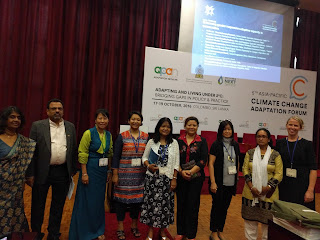


Former mountaineer, Ms. Tshering Uden Bhutia is a community leader from West Sikkim. She works with the community organization Khangchendzonga Conservation Committee (KCC) to promote eco-tourism in Sikkim, particularly in the trails leading up to Kanchenjunga, the third highest peak in the world and sacred to the both countries it straddles (Nepal and Sikkim in India). Uden and KCC have promoted Sustainable Mountain Tourism in Sikkim which has helped build resilience and create a sustainable community with sustainable livelihoods in the Himalayan state through a wide variety of activities. Uden has represented her state and organization in many fora but the APAN forum (5th Asia Pacific Climate Change Adaptation Forum in Colombo, Sri Lanka, October 17 to 19, 2016) was her first international venture.  She part of the panel in the parallel session “Enhancing Gender Responsive Adaptive Capacity in Communities” on the last day of APAN 2016.

  The social entrepreneur from Yuksam in West Sikkim, Uden has been involved with sustainable livelihood projects and waste management for over twenty years and her efforts are embody the core principles of Sustainable Mountain Tourism, the theme for International Mountain Day 2021 (December 11) . Her love of the mountains translated into community leadership. She hails from the Himalayan state of Sikkim, in a district at the base of the sacred and majestic Kanchenjunga. And leads the Khangchendzonga Conservation Committee (KCC) which “comprises of community representatives, community based organization and other key stakeholders highly committed toward nature conservation.”

In her childhood Uden’s family tearoom served varieties of dishes using Maggi 2-Minute Noodles. And over her lifetime she witnessed the noodle wrappers take over her home. While climbing the peaks as well the debris consisted of food wrappers. Instant noodles and other instant foods cooked with just hot water are a great convenience for mountaineers and for people cooking in the open.  It is used everywhere and is the fast food of choice as it is both easy to carry and easy to cook. Yet the plastic wrappers leaves a non-biodegradable wake behind tourists, trekkers, and mountaineers for only a fraction committed to “leaving behind only footprints.”

Since 1997, as a personal contribution to reducing waste she decided to avoid Maggi products and the like.  She made her own instant noodles and carried it in reusable containers that she brought back, without littering in her wake. She opted for fruits and nuts to processed foods and though it was hard and sometimes expensive – and literally extra baggage, she developed and fully committed to the pro-planet habit.  For as the KCC website puts it,

Conservation cannot happen with an empty stomach, hence KCC strongly believes in providing livelihood support to mountain people and facilitating them for alternative livelihood with minimum impact on nature and the rich culture, thus creating a win win situation among nature and its people.

KCC conserves natural and cultural resources through skill development programs, micro planning, awareness campaigns, monitoring of natural resources as well as by advocating for appropriate policy changes. Through KCC and other community level activities Uden now has more waste management, reducing, reusing and recycling programmes. The habit turned into a job creator and in turn she and other community leaders build pro-planet skills and capacities through training, exposure and other participatory means.

Source: http://www.redelephantfoundation.org/2017/01/being-pro-planet-taking-personal.html

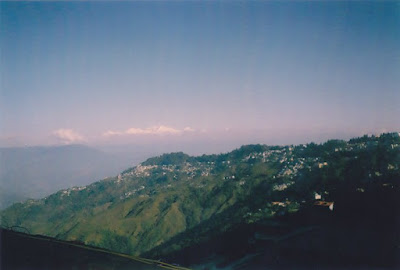
View of the snowy peaks including Kanchanjenga from the hill-station Darjeeling, West Bengal 2010 (My Mum's photography).  


Coming from a coastal tropical metropolis (Chennai, Tamil Nadu, South India) I travel to mountains to experience a different ecosystem to my usual urban, coastal and hot one with limited wildlife and biodiversity. I also heed the call of the mountains to experience the beauty of the night skies, the thrill of experiencing snow fall and finding a cozy rest stop in the cold clime and enjoy the famed hospitality of communities from hills and their unique and delicious cuisine. For this reason I prefer homestays, engaging local guides to take us to the tourist spots and the little-known pristine spots teeming with all things wild before shopping and eating in local markets and eateries for an authentic experience that also puts my money in the hands of the hill-station's residents.

These are Indian perspectives, I asked a few people in the hospitality and travel sectors in hill stations in other parts of South Asia and they came through with great insights:

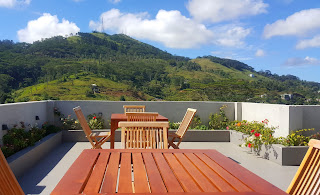
View from the rooftop, Idyllic Vista (indeed!), Kandy, Sri Lanka

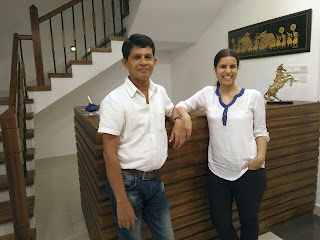
Devika Fernando, Author & Innkeeper along with her husband Thushara Fernando from Kandy, Sri Lanka had this to share: 

“Kandy is a city surrounded by hills and mountains. Naturally, that means some guests want to go on hikes. Our inn is situated high up in Hanthana so it's a good starting point. Sustainable tourism in the mountains is something that's close to our hearts. My husband and I always advise our guests not to leave any trace of themselves behind - that especially means no littering! Not taking anything from the ecosystem back with them is just as important. Nature should be observed, not disturbed. Staying on the hiking trails is advisable too, for the tourists' safety as much as for all the animals that call these misty mountains their home.”

*

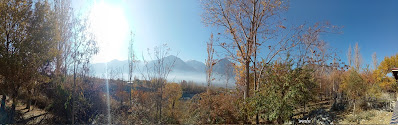
View from the window, Gilgit-Baltistan

Syedda Ramla the mompreneur from Gilgit-Baltistan, quoted on her eco-tourism article before had this to share: 

"My name is Syedda Ramla and I own BetterBonds, an online shop for 'Himalayan Medixine' which is my modern take on traditional healing with plants, crystals and honey. I make gemstones jewelry and herbal tea and balms. We are at http://instagram.com/betterbonds. Hit us up!

 I migrated to Gilgit-Baltistan from the coastal Karachi in 2013. What pulled me was the quest to experience and observe an earthy, handmade life that was ecologically integrated. I was fascinated by handmade homes, a connection with cattle and produce, a high dependence on seasonality, and the opening of the Self to the elements. I admit, I also love the thrill of living on the edge; I love what it demands of our person and psyche. I passed some tests and failed others.

 For those who are on such 'soulular' quests, this region can provide one of the last few such remaining opportunities on our otherwise rapidly modernizing and gentrified Earth. But I warn you, this place, too, is changing and that is why we need more of those travelers who think in sustainable and earthy ways. That to me is the true potential of the place.

 Unfortunately, unlike the rest of Himalayan nations and regions, Pakistan is still not seeing this opportunity fully or comprehending the nuances of it. We still have a police state approach, we still give tourists the stink eye and ask: "Why are you here? Why are you traveling? Why aren't you back home with your Momma?" I have seen this too many times to be comfortable in pretending it is otherwise.

 On the other hand, Nepal and India for instance wholly grabbed the hippie movement, for instance, by the horns and steered it fairly usefully. As a result a whole counterculture was born, and tourists are attracted in hordes to those regions. We are still behind. There is favoritism for Whites. Our local tourists are neither informed nor regulated.

 I would wholly advocate a restricted tourism approach to protect ecology: Issue a number of passes per year, and make economy options available. Brief people well. Grab the moment and speak to them about environmental concerns, make it mandatory to run a drill on each bus' communication system, make it pleasing. Why not? This is entirely possible.

 Finally, folks, come here for Autumn and come well-prepared. The goldens, browns, reds, last greens on the trees are lovely. The angles of sunlight are ephemeral as seen in the above picture from my home a few days ago (December 2021)."

So remember, next time you heed the call of the mountains, tread lightly, ecologically speaking and travel responsibly and leave the paradise, if not better than you found it at least as wonderful as it was when you got there!

Friday, 21 August 2020

Earth Overshoot Day 2020 is Madras Day 2020: August 22


August 22, 2020 is both Madras Day locally and Earth Overshoot Day globally. As the coastal metropolis, Chennai formerly known as Madras celebrates its 381st birthday, the COVID19 pandemic's global lock down and quarantines has pushed the Earth Overshoot Day by 24 days to August 22nd. 


Earth Overshoot Day marks the date when humanity has exhausted nature's budget for the year. For the rest of the year, we are maintaining our ecological deficit by drawing down local resource stocks and accumulating carbon dioxide in the atmosphere.

 The coronavirus that affects the respiratory system of living things has affected the global transportation infrastructure disrupting supply chains and reducing human consumption. At the start of the pandemic there were many stories of wildlife reclaiming urban spaces and hope of our earth's environment healing and climate stabilizing. The disruption of aviation, shipping and transport sectors had reduced the fossil fuel consumption as well as generally resource intensive products. Local suppliers and locally grown food have addressed the shortfall. 

Yet for all the disruption to our lifestyles and the economy our consumption still outstrips our planet's resources by a whole quarter. So the priority as we envision the post-COVID19 world is to be responsible and sustainable in our consumption and production (SDG12) so that we #MoveTheDate of Earth Overshoot Day to the year end. Thus we stop borrowing and living off the resources of future generations: 

https://www.facebook.com/2040Film/videos/2583969951914239


As Chennai celebrates 381 years a future as a Sustainable City, Sustainable Community (SDG11) as well as a Smart City needs to adopted. Chennai's coastal position, expansion eating into vital wetlands, and dependence on ground water we are vulnerable to the buffets of global warming, climate change and climate catastrophe. The flood-drought cycles, unbearable summers in urban heat islands, creeping salinity as well as seawater ingress are vicious byproducts locally of global over-consumption which calls for robust climate action (SDG13). Chennai's green spaces as well as incentives and interests urban and rooftop farming as well as the Tamil Nadu's wind energy harnessing successes are powerful manifestations of sustainable development.   


Hence in the quest to move the date of Earth Overshoot Day should make robust adoption of the sustainable development goals (SDGs) by all entities from cities, institutions to nations.

Thursday, 23 May 2019

Of Birds, Bees & Turtles: Celebrating Biodiversity in May

In May we celebrate Endemic Bird Day on 4th, World Bee Day on 20th, the International Day for Biological Diversity on 22nd and World Turtle Day on 23rd. All these days are observed to raise awareness about the various at-risk species and at-risk biodiversity itself. Early in May, the report from Intergovernmental Panel on Biodiversity and Ecosystem Services (IPBES), warned that the impact of modern civilization nature has put 1 MILLION plant and animal species of our planet's estimated 8 MILLION species at risk of extinction. Basically, 
"due to humankind’s relentless pursuit of economic growth!"
Source: Felix Mueller/Wikimedia Commons, CC BY-SA

The quest for convenience and easy living is unleashing a pogrom on all other life forms. Ironic, that under the UN declared period of pursuing sustainable development goals (#SDGs) human activity is predominantly unsustainable and putting life and biodiversity at risk. Be it the quest for "Responsible Consumption and Production" #SDG12, or even "Life Below Water" #SDG14 and "Life on Land" #SDG15, the pursuit of so-called SDGs 8 & 9 "Decent Work and Economic Growth" & "Industry, Innovation and Infrastructure" is putting other SDGs at risk in addition to biodiversity. The sixth mass extinction, a.k.a. the Holocene or Anthropocene Extinction is the existential threat of the 21st Century. Yet, powerful lobbies like Big Oil, Big Pharma, or as Vandana Shiva puts it the "Poison Cartel", Industrial Agriculture & Fishing, Manufacturing lobbies, FMCG and even Fast Fashion have worked to keep "Business as usual" even in the face of it's devastating impact on life on our planet and it's environment. 


The title of a recent paper by Jason Hickel of the Department of Anthropology, Goldsmiths, University of London, "The contradiction of the sustainable development goals: Growth versus ecology on a finite planet" summarizes the dichotomy and the dilemma best. 

Human greed and gluttony manifesting in the love for mass production and mass markets is causing mass extinction! We can't allow "business as usual" when life is at stake:

  •  5G has been seen as most devastating of all mobile technology on biodiversity in general and birds in particular.
  •  Chemical insecticides and pesticides that kill bees more effectively than pests or harmful insects. 
  • Unsustainable agricultural and fishing practices in the quest for food security and profits is actually fueling "hunger" as well as "food waste."
  • A glut of plastics chokes the planet and all life forms, including turtles and birds shown in iconic the viral videos to be choking on plastic waste, be it through the subsequent air, water and soil pollution of plastic waste.
  • Rainforests - the ultimate biodiversity hotspots - are cut down to make way for monoculture hubs of agriculture, cattle ranches and palm plantations.
  • Climate change fueled by continued dependence on fossil fuels in turn super-sizes natural disasters devastating life.
The PETA ad campaign - Killer Cows - may be graphic but is apt, in the quest for meat in ur meals we are endangering biodiversity itself: 


Source: PETA.

We share our planet with many life forms, we are all connected. When the "bell tolls" for other species, if we ignore it, it will soon toll for us too, extrapolating and misquoting lines from John Donne's famous poem,

any man's  [species'] death diminishes me, because I am involved in mankind [all life forms], and therefore never send to know for whom the bells tolls; it tolls for thee [us all!!!].