Showing posts with label SDG15. Show all posts

Monday, 11 May 2026

Women Winning International Awards for Environmental Action


Recently there was mainstream media news bytes in between all the din of election news that two Indian Women Conservationists won the Whitley Awards - also popularly  known as the "Green Oscars" - at the near end of Earth Month (April, as Earth Day is April 22nd). 


Parveen Shaikh, a scientist with the Bombay Natural History Society for her conservation efforts to protect the riverine bird the Indian Skinner, and Barkha Subba, a scientific advisor to the NGO the Federation of Societies for Environmental Protection for her work to protect the Himalayan Salamander in Darjeeling of West Bengal, were both honored at the Royal Geographic Society in London on April 29th, 2026 by Princess Anne.

The Wire and The Better India did wonderfully informative stories on these superwomen from India and beyond.


Dr. Kirthi K. Karanth, another Indian woman and scientist working to mitigate man-animal conflict was recognized as a National Geographic as its 2026 Rolex National Geographic Explorer of the Year. In the time of the Climate Crises and increased Man-Animal Conflicts due to encroachment and unsustainable development of key animal habitats we need conservationists more than ever. 


Internationally all six awards of what is purported to be the Green Nobels - the 6 Goldman Environmental Prizes went to six women - awarded in United States to environmental scientists, environmental activists, environmentalists and conservationists from across the globe.


There is a long history of community leadership and scientific study by women which has been impactful from the Chipko Movement of the hill state of Uttarakhand (then part of Uttar Pradesh) in India to Jane Goodall, an amateur who became the voice of the voiceless creatures she observed and served. 

As with all greats they are first misunderstood and then recognized and rewarded, if lucky in their lifetime. They face down the remorseless entrenched systems that exploit the world and consume its resources greedily. 


These women and the many unrecognized and courageous grassroots and scientific conservationists are vital in preserving biodiversity and life on land and beyond (SDG 15).  By recognizing the struggles of women scientists and environmental activist we give gender equality (SDG 5) a boost in a very challenging and male-dominated field which is overwhelmed by the onslaught of Big Interests, Big Power and Big Industry. 


The reputation and experiences of Polish conservationist and "zoo-psychologist" Dr. Simone Kossak demonstrate this resistance to environmental conservation especially by women in the face of  what is deemed "development". First dismissed as a witch and animal-whisperer, the daughter and granddaughter of established nationally revered  artists, she chose to become a scientist and in 1971 started working in situ in the forests bordering Poland and Belarus in a hut without electricity and mod-cons to save endangered lynxes and wolves among other native species.  She stood up to those exploiting the wildlife and natural resources and faced down big industrial interests at great personal and legal peril.  Finally her efforts were recognized in addition to saving Life on Land (SDG 15) while also boosting Gender Equality in the scientific and conservation communities. A big win for sustainable development whenever it happens - recognition and gratitude to conservationists especially women scientists' community-level efforts to preserve nature. 


Saturday, 11 December 2021

South Asian Perspectives on Sustainable Mountain Tourism: International Mountain Day 2021

The hills are calling but when we answer the call sometimes we find the popular mountain tourist destinations full of trash and traffic. Invariably what's popular in these places are big-chain hotels, big-chain souvenir shops and super-markets. As a result a very small fraction of the tourist money trickles into the pocket of locals who bear the tax burden and inconvenience of living in a congested and trashed tourist mountain haven. Thus, in this gap between COVID waves as people flock to mountain escapes is an apt time for the theme of International Mountain Day 2021 to be Sustainable Mountain Tourism.


 So what is Sustainable Tourism?

Sustainable tourism is defined by the UN Environment Program and UN World Tourism Organization as “tourism that takes full account of its current and future economic, social and environmental impacts, addressing the needs of visitors, the industry, the environment and host communities.” 

So how is this operationalized: Stay in local homestays and non-chain locals-owned hotels, buy souvenirs and local produce from the locals and commit to be a responsible visitor. See more on eco-tourism in this article by Ramala.

When we ensure sustainable tourism in the hills, hill stations and mountain-top tourist paradises, we ensure that leave behind only footprints and pleasant memories with their mountain hosts. This ensures that tourism there achieves a range of sustainable development goals (SDGs): 

SDG8 - Sustainable livelihoods enshrined in the  principles of sustainable tourism ensures Decent Work and Economic Growth in the mountain destination. 

SDG11 - the organization of a Sustainable Community supported by sustainable livelihoods generated by responsibly used tourist money.  

SDG12 - Responsible Consumption and Production of resources in the hill-top tourist draw. 

SDG13 & SDG 15 - Through Sustainable Mountain Tourism which puts protecting the tourist spot's environment and making a conscious effort to reduce the ecological and carbon footprint of the presence of tourists there even as the tourist money flows into local pockets and institutions that sustainably develop, protect and restore the sensitive mountain ecosystem achieves both Climate Action and champions Life on Land.
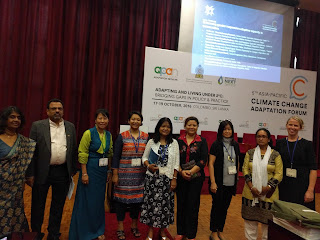


Former mountaineer, Ms. Tshering Uden Bhutia is a community leader from West Sikkim. She works with the community organization Khangchendzonga Conservation Committee (KCC) to promote eco-tourism in Sikkim, particularly in the trails leading up to Kanchenjunga, the third highest peak in the world and sacred to the both countries it straddles (Nepal and Sikkim in India). Uden and KCC have promoted Sustainable Mountain Tourism in Sikkim which has helped build resilience and create a sustainable community with sustainable livelihoods in the Himalayan state through a wide variety of activities. Uden has represented her state and organization in many fora but the APAN forum (5th Asia Pacific Climate Change Adaptation Forum in Colombo, Sri Lanka, October 17 to 19, 2016) was her first international venture.  She part of the panel in the parallel session “Enhancing Gender Responsive Adaptive Capacity in Communities” on the last day of APAN 2016.

  The social entrepreneur from Yuksam in West Sikkim, Uden has been involved with sustainable livelihood projects and waste management for over twenty years and her efforts are embody the core principles of Sustainable Mountain Tourism, the theme for International Mountain Day 2021 (December 11) . Her love of the mountains translated into community leadership. She hails from the Himalayan state of Sikkim, in a district at the base of the sacred and majestic Kanchenjunga. And leads the Khangchendzonga Conservation Committee (KCC) which “comprises of community representatives, community based organization and other key stakeholders highly committed toward nature conservation.”

In her childhood Uden’s family tearoom served varieties of dishes using Maggi 2-Minute Noodles. And over her lifetime she witnessed the noodle wrappers take over her home. While climbing the peaks as well the debris consisted of food wrappers. Instant noodles and other instant foods cooked with just hot water are a great convenience for mountaineers and for people cooking in the open.  It is used everywhere and is the fast food of choice as it is both easy to carry and easy to cook. Yet the plastic wrappers leaves a non-biodegradable wake behind tourists, trekkers, and mountaineers for only a fraction committed to “leaving behind only footprints.”

Since 1997, as a personal contribution to reducing waste she decided to avoid Maggi products and the like.  She made her own instant noodles and carried it in reusable containers that she brought back, without littering in her wake. She opted for fruits and nuts to processed foods and though it was hard and sometimes expensive – and literally extra baggage, she developed and fully committed to the pro-planet habit.  For as the KCC website puts it,

Conservation cannot happen with an empty stomach, hence KCC strongly believes in providing livelihood support to mountain people and facilitating them for alternative livelihood with minimum impact on nature and the rich culture, thus creating a win win situation among nature and its people.

KCC conserves natural and cultural resources through skill development programs, micro planning, awareness campaigns, monitoring of natural resources as well as by advocating for appropriate policy changes. Through KCC and other community level activities Uden now has more waste management, reducing, reusing and recycling programmes. The habit turned into a job creator and in turn she and other community leaders build pro-planet skills and capacities through training, exposure and other participatory means.

Source: http://www.redelephantfoundation.org/2017/01/being-pro-planet-taking-personal.html

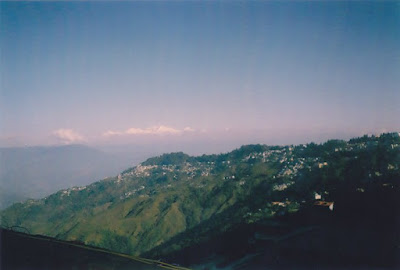
View of the snowy peaks including Kanchanjenga from the hill-station Darjeeling, West Bengal 2010 (My Mum's photography).  


Coming from a coastal tropical metropolis (Chennai, Tamil Nadu, South India) I travel to mountains to experience a different ecosystem to my usual urban, coastal and hot one with limited wildlife and biodiversity. I also heed the call of the mountains to experience the beauty of the night skies, the thrill of experiencing snow fall and finding a cozy rest stop in the cold clime and enjoy the famed hospitality of communities from hills and their unique and delicious cuisine. For this reason I prefer homestays, engaging local guides to take us to the tourist spots and the little-known pristine spots teeming with all things wild before shopping and eating in local markets and eateries for an authentic experience that also puts my money in the hands of the hill-station's residents.

These are Indian perspectives, I asked a few people in the hospitality and travel sectors in hill stations in other parts of South Asia and they came through with great insights:

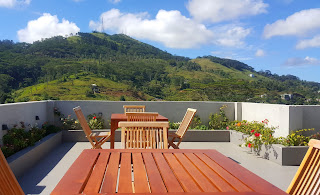
View from the rooftop, Idyllic Vista (indeed!), Kandy, Sri Lanka

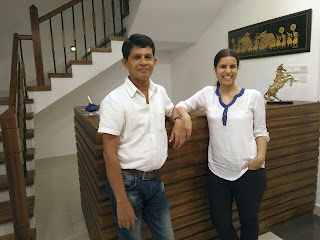
Devika Fernando, Author & Innkeeper along with her husband Thushara Fernando from Kandy, Sri Lanka had this to share: 

“Kandy is a city surrounded by hills and mountains. Naturally, that means some guests want to go on hikes. Our inn is situated high up in Hanthana so it's a good starting point. Sustainable tourism in the mountains is something that's close to our hearts. My husband and I always advise our guests not to leave any trace of themselves behind - that especially means no littering! Not taking anything from the ecosystem back with them is just as important. Nature should be observed, not disturbed. Staying on the hiking trails is advisable too, for the tourists' safety as much as for all the animals that call these misty mountains their home.”

*

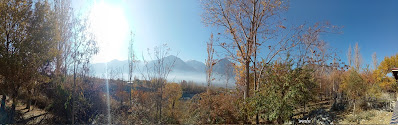
View from the window, Gilgit-Baltistan

Syedda Ramla the mompreneur from Gilgit-Baltistan, quoted on her eco-tourism article before had this to share: 

"My name is Syedda Ramla and I own BetterBonds, an online shop for 'Himalayan Medixine' which is my modern take on traditional healing with plants, crystals and honey. I make gemstones jewelry and herbal tea and balms. We are at http://instagram.com/betterbonds. Hit us up!

 I migrated to Gilgit-Baltistan from the coastal Karachi in 2013. What pulled me was the quest to experience and observe an earthy, handmade life that was ecologically integrated. I was fascinated by handmade homes, a connection with cattle and produce, a high dependence on seasonality, and the opening of the Self to the elements. I admit, I also love the thrill of living on the edge; I love what it demands of our person and psyche. I passed some tests and failed others.

 For those who are on such 'soulular' quests, this region can provide one of the last few such remaining opportunities on our otherwise rapidly modernizing and gentrified Earth. But I warn you, this place, too, is changing and that is why we need more of those travelers who think in sustainable and earthy ways. That to me is the true potential of the place.

 Unfortunately, unlike the rest of Himalayan nations and regions, Pakistan is still not seeing this opportunity fully or comprehending the nuances of it. We still have a police state approach, we still give tourists the stink eye and ask: "Why are you here? Why are you traveling? Why aren't you back home with your Momma?" I have seen this too many times to be comfortable in pretending it is otherwise.

 On the other hand, Nepal and India for instance wholly grabbed the hippie movement, for instance, by the horns and steered it fairly usefully. As a result a whole counterculture was born, and tourists are attracted in hordes to those regions. We are still behind. There is favoritism for Whites. Our local tourists are neither informed nor regulated.

 I would wholly advocate a restricted tourism approach to protect ecology: Issue a number of passes per year, and make economy options available. Brief people well. Grab the moment and speak to them about environmental concerns, make it mandatory to run a drill on each bus' communication system, make it pleasing. Why not? This is entirely possible.

 Finally, folks, come here for Autumn and come well-prepared. The goldens, browns, reds, last greens on the trees are lovely. The angles of sunlight are ephemeral as seen in the above picture from my home a few days ago (December 2021)."

So remember, next time you heed the call of the mountains, tread lightly, ecologically speaking and travel responsibly and leave the paradise, if not better than you found it at least as wonderful as it was when you got there!

Wednesday, 27 October 2021

From COP15 to Climate Action Day to COP26: October Musings

 The big deal in October 2021 includes two environmental conference of parties (COP) separated by the first ever Earthshot Prize ceremony and the International Day of Climate Action. 

Between the two avenues for rhetoric the finalists and winners of Earthshot Prize with their innovative solutions for the problems that plague our planet offer hope in this the first year of the UN Decade of Ecosystem Restoration. They are icons to be celebrated o f the Day of Climate Action and beyond in order to bridge the climate rhetoric-climate reality divide.


The first COP to occur in October was the first part of the Biodiversity COP15 that took place online between October 11th and 15th, online among the parties to the Convention on Biological Diversity. With China as chair, this was a forerunner to the second-part of the COP15 - the in-person session scheduled to happen in Kunming between April 25th and May 8th 2022. With the Chinese premiere giving the Climate COP in Glasgow beginning on Halloween 2021 a miss, this Biodiversity COP15 was where China flexed its environmental muscle. With the 6th Mass Extinction and immeasurable and irreplaceable biodiversity loss being part of our reality, made worse by the nightmare of the climate crisis manifesting the world over with particularly devastating effects in the poorer, island, coastal and tropical parts of the world, the need to act to protect biodiversity and address climate change is existentially vital. Thus it makes sense that in between the two COPs on October 19th, the million-pound Earthshot Prize ceremony to honor the 5 climate heroes - Eco-Oscars as it were, was hosted by the Duke and Duchess of Cambridge in Alexandra Palace, in London. This competition for the Royal Foundation's five million-pound prizes was launched mid-pandemic in 2020 by Prince William to give Earth a shot in the arm and address five critical issues and the five winners addressed these innovatively and effectively 

(1) 'the restoration and protection of nature' - Costa Rica, (2) 'air cleanliness' - Takachar, India (3)  'ocean revival' - CoralVita - Bahamas, (4) 'waste-free living' - The Food[Waste] Hubs of the City of Milan, Italy & (5) 'climate action' - Hydrogen producing Enapter's AEM electrolyser (Thailand, Germany, Italy).


Key takeaways from the Online UN Biodiversity COP15 include world leaders acknowledging certain facts but not taking much action: 

(1) As Nature's Decline Threatens Humanity, We Must Work to Reverse Biodiversity Loss; (2) Post-2020 Global Biodiversity Framework: Understanding the Scope and Scale of the Biodiversity Crisis; (3) Kunming Declaration - a commitment to protect 30% of land and sea area by 2030 [30-30] (4) Gap between promises of biodiversity protection and any real or effective climate action (5) Need for Global Biodiversity Fund. The difficulty in actually achieving the much needed 30-30 protection in the face of so-called "economic realities" - the pandemic-fuelled global economic slowdown and resultant domino of energy crises and economic crisis that put environmental crises on the back burner even though it costs nations billions of dollars they can't afford. 


Case in point, according to a World Meteorological Organization report, the natural disasters in 2020 cost India $87 billion, i.e., ₹65 Lakh Crores.

As I predicted in my article for the Chennai Centre for China Studies (C3S) in September, not much can be expected from COP15 in the face of geopolitical and human security concerns. The main agenda of COP15 included positioning China as an environmental force to be reckoned with, showcase of Chinese success stories in biodiversity protection and its Red Line Plan as well as paving the way for a much-needed multi-billion dollar Global Biodiversity Fund even though it will take a long time for countries to make and honor these commitments. 

With these gaps in rhetoric and reality in mind, perhaps it becomes clear why the International Day for Climate Action 2021, October 24th, doesn't have the same prestige or reach of say Earth Day or Environment Day. The Fridays for Future movement is more impactful. and in a way as long as there is real climate action, it doesn't really matter if we celebrate the Day of Climate Action widely or not! And this is where it is hoped that the Climate COP26 to be held in Glasgow between October 31st and November 12th will make a dent in ensuring that world leaders and corporations commit to climate action and limiting carbon emissions. The real scary thing on Halloween 2021 will be the cost in emissions and money that the world is spending on what many believe is an eye-wash of a "greenwashing" conference hoping for a better outcome!

So ahead of COP26 here's a checklist to keep in mind while assessing the Climate COP26 that begins on Halloween: 


Saturday, 25 September 2021

Act on SDGs: Turn It Around

 Six years into the Sustainable Development Regime, on this the Global Week to #Act4SDGs, I, Raakhee Suryaprakash from Chennai, India, am using the platforms of my initiatives Sunshine Millennium and Re.Plastic  (https://www.facebook.com/Re.Plastic10) to showcase and #Amplify @SDGActions from around the world. I am communicating about and sharing #SDG best practices to #TurnItAround on Action on the Sustainable Development Goals. 

Through my initiative Sunshine Millennium, I amplify successes in the fields of #SDG7 - Affordable & Clean Energy, #SDG13 - Climate Action, #SDG11 - Sustainable Cities & Communities, #SDG6 - Clean Water & Sanitation as well as the SDGs 14 & 15 -#LifeBelowWater & #LifeOnLand - basically biodiversity conservation.

With my initiative  REplastic I amplify #SDG8 #SDG9 & #SDG12 for I believe responsible plastic waste management and controlling plastic production combines aspects of #innovation & responsible consumption and production while yielding #DecentWork and #EconomicGrowth.  


Saturday, 1 May 2021

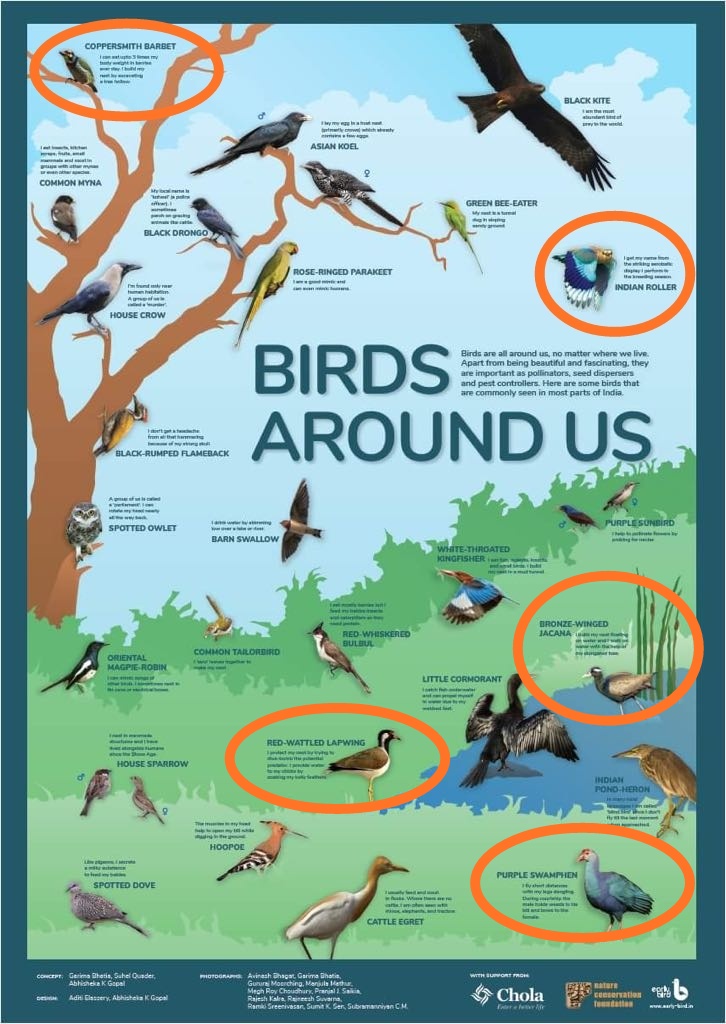
Our Feathered Friends


Spring is celebrated in many forms around the world and across India. The season of rebirth and re-greening is deified in many cultures and mythologies of goddesses of spring and fertility abound.  It dovetails with the regional celebrations of New Year and Harvest in the Indian subcontinent and neighbourhood (Puthandu, Vishu, Chaitra Navratri, Ramadan, Cheti Chand, Pratipada, Jur Sital/Jude Sheetal, Baisakhi, Navreh, Bikoti, Bohag Bihu, Cheiraoba, Poila/Bengali Boishak, Sajibu nongma panba, Pana Sankranti, Naba Barsha, Sarhul, Gudi Padwa, Ugadi as well as Avurudu/Aluth Avurudda/Sinhala New Year & Songkran/Thai New Year or Water festival of Myanmar, Laos & Cambodia). 


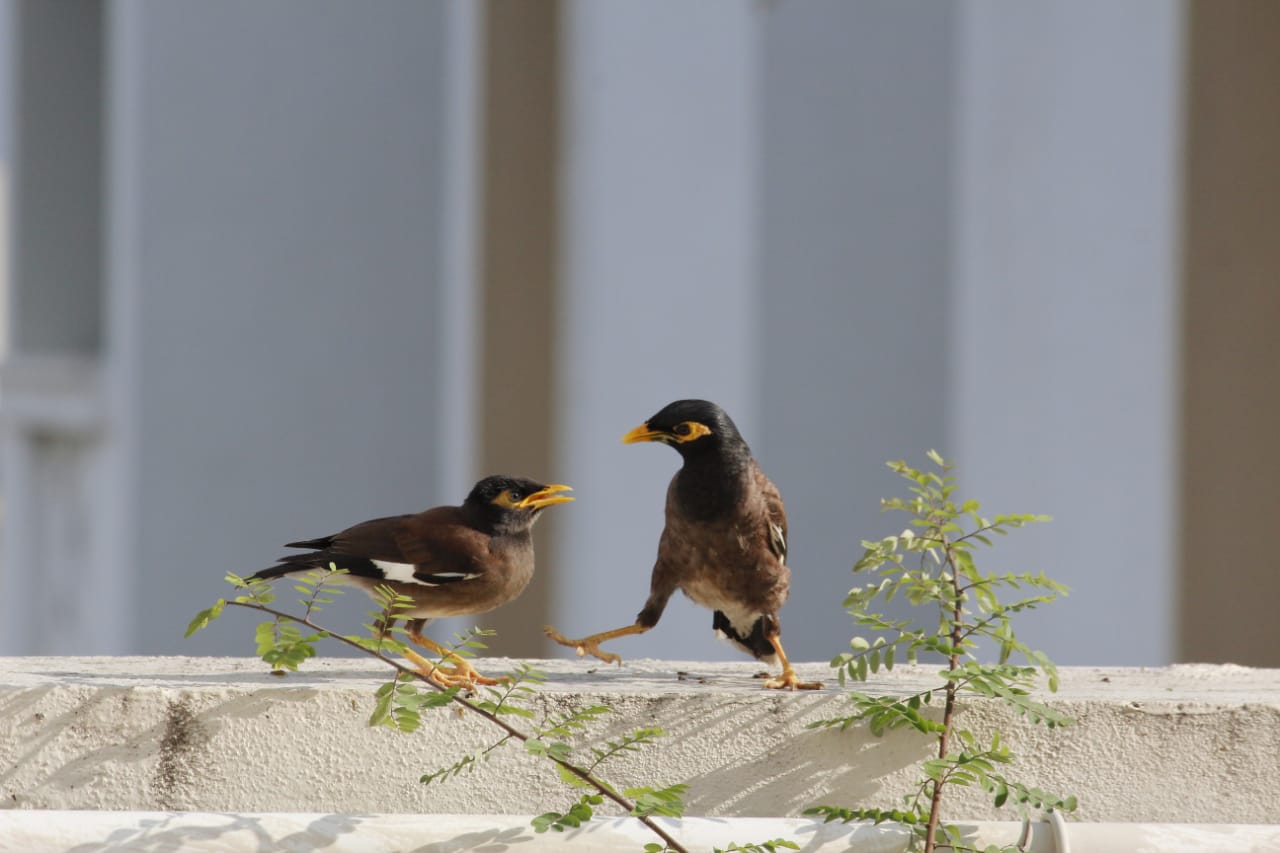
 March 20, which is the vernal equinox in the Northern Hemisphere is observed as World Sparrow Day as well as the International Day of Happiness. As I tweeted, this is apt as observing sparrows makes me happy.


I'll elaborate, bird-watching makes me happy and nothing makes me happier than spotting them in my backyard and garden. My interest in nature and the environment was kindled by feathered visitors who appeared in my childhood campus which was filled with greenery as well as being close to the beach. Sparrows used to regularly fly into our flat and my bedroom and investigate the mirror on my Godrej almirah  (steel cupboard) and the braver ones used to even sit on me as took an afternoon nap. The very best memories. 

The fact that my school campus also abounded with fruit trees teeming with bird life and the occasional monkey gangs added to my early interest in bird life. So yay again for Sishya - the best school in my opinion for so many reasons those days. I always looked forward to meeting my friends and feathered friends there and hated missing even a day of school. 


In my present residence although I am further away from the beach, thanks to a survival of the fittest garden, I get a lot of winged visitors - both birds and bats!!! As writer and birdwatcher Christy Bharath tweeted with the wonderful video compilation of ECR birds - the East Coast Road is not just a scenic route but a birder's paradise.


But it is our feathered friends who brighten the day as the noisily welcome dawn and dusk as well as being extra active during springtime. Here, inside my home, its tailor birds who are more frequent visitors and it is only this past year that a couple of sparrows have entered. They are cherished whether I come across them inside or out. My vision might be poor, but while I may look through/overlook people and inevitably fail to recognize them immediately when coming across them unexpectedly, birds always catch my eye, especially unexpected sightings. 


Be it Ostara/Eostre, the Goddess of Spring (Eastern European/Germanic/Wiccan) and her celebration of rebirth co-opted in Easter as shown in the series American Gods or the return of the Greek/Roman Spring goddess Kore/Presephone, from her time in the underworld with her husband Hades to her mother the Goddess of grain and harvest Demeter (the Webtoon, Lore Olympus retells this beautifully), spring is made glorious by greenery,  gardens, grain and birdsong. 

The book Effin' Birds by Aaron Reynolds and Twitter handle @EffinBirds combines beautiful bird illustrations and pithy profanity both very useful in making one feel better. 


Pic: Shikra
Pics: Sunbird nest and sunbird in flight and on a Hibiscus branch.

Pics: Tailor Bird fledglings/chicks - newly hatched in Hibiscus leaf nest.


Pic: Water Hen on my garden wall.

I am spiritually enriched by the presence and appearance of our feathered friends. The extract from Dorothy Francis Gurney's poem God's Garden beautifully rendered as a glass painting pictured at the start of this post resonates with me. And recent research has found that birds give people as much happiness as money in the bank! In these days of high uncertainty and high anxiety due to the devastation of the COVID-19 second wave, simple pleasures are worth their weight in gold.

It is only over the past six years that I recognized and distinguished bird calls especially the laugh-like call of the Kingfisher. The Laughing Kookaburra song which I learnt in junior school suddenly made sense - the laughing jackass after all is a relative from down under. Thanks to the internet and the resources it has made available, school kids and those interested can get to learn a lot more even without first-hand bird encounters. 

Socially distanced bird walks still happen in the city (Check out EFI events #NativesOfOurLakes), but apps such as e-bird make it easier still. Rohan Chakravarthy summarizes it best in his cartoon from last April, during first lockdown, professional bird-watchers feel the pinch but balcony bird-watchers reaped the benefit of the forced slowing down of life that made many of us look up from devices and appreciate the natural world. 


Source: Green Humour, April 4, 2020.
Rohan's book for the Bombay Natural History Society, Bird Business is a delight as are all his cartoons especially those related to bird-watching!

As we are buffeted by the daily realities and perils of the pandemic, let's look to nature and nurture it, so that it may nurture us. As summer approaches and the heat and humidity becomes unbearable thanks to global warming and the climate catastrophe we have precipitated, remember to set out water for our feathered friends. Every little bit helps, for birds and beasts - as the actions of the Water King of Kenya for the past five year's drought season demonstrates. 


Tuesday, 2 February 2021

Wetlands & Water: World Wetlands Day 2021

 Wetlands sustain life. Wetlands protect life. The day of adoption of Ramsar Convention protecting wetlands, February 2nd, has since been celebrated as " World Wetlands Day." The 2021 theme is Water and Wetlands both vital for survival and both used up as urban centres sprawl to take up what used to be vital wetlands that have sustained life and livelihoods for centuries.


According to the Ramsar Convention, the inclusive definition of Wetlands is as follows:

“…wetlands are areas of marsh, fen, peatland or water, whether natural or artificial, permanent or temporary, with water that is static or flowing, fresh, brackish or salt, including areas of marine water the depth of which at low tide does not exceed six metres."

This inclusive definition is important in the quest to protect what's left of the wetlands - these teeming biodiversity hotspots because so many cities - metros and capitals have been built on or around what used to be massive wetland systems. 

Dismissed as "swamps," drained of water and later pumped full of concrete our "urban planners" of the past have created water scarce cities that are ironically flood prone as well. As the cooling water, flora and fauna of the marshes were replaced by concrete cities urban heat islands flourished negating the wetland carbon sinks and adding to global warming and the climate emergency.


Last year, the Ramsar-Bonn connect was highlighted just before the pandemic ground the world world to a halt, at the 13th conference of parties to the Bonn Convention of migratory species of wild animals, hosted in India: 10 wetlands across India were designated Ramsar sites or "wetland sites of international importance."

Migratory birds in salt marshes - Rann of Kutch

Hopefully as the powers that be commit to sustainable development, our wetlands will be protected and future cities will all be sustainable cities not just "smart cities." Wetlands and water are inseparable and if we are to tackle the climate crisis we need to put protecting wetlands at the heart of climate action. 

Wetlands are water reservoirs, natural flood prevention, vital carbon sinks as well as sustaining a vast array of biodiversity. Urbanization is an inevitable consequence of modernization but if mankind is to survive our cities shouldn't grow at the cost of wetlands. Another consequence of urbanization and modernization is the growing plastic crisis - plastic waste is as dangerous to the health and survival of wetlands as marine plastic is to oceans. But, there are many efforts underway to remove plastics and landfills from our wetlands as well as efforts to stop plastic from ending up in wetlands in the first place. 

How wetlands manage water: Wisconsisn

Wetlands are the final defense against the intensified flood-drought cycle caused by climate change. Cities running out of water is an ever-recurring crisis across the planet and wetlands, as shown in Kolkata and Kochi, can be vital in ensuring water security and SDG 6 (Clean water and sanitation) in cities. After the Chennai Floods back in 2015 and the Vardah Cyclone the following year, many people saw first hand how fast the Pallikarnai Marsh absorbed flood waters, yet we continue to encroach upon it with concrete and garbage to expand this already water-starved flood-prone city of Chennai. 


Protecting wetlands is ensuring water security and water security spells human security. Thus it is in the interest of mankind to SAVE THE WETLANDS!


Saturday, 29 February 2020

INDIA BIDS MIGRATORY SPECIES Atithi Devo Bhava

India hosted the Thirteenth Conference of Parties to the Convention on the Conservation of Migratory Species of Wild Animals (CMS COP13) in Gandhinagar, Gujarat, from 15 to 22 February 2020. With this event, India assumes presidency of the Bonn Convention COP for three years as well as setting the stage for the Post-2020 Global Biodiversity Framework which will be finalized in the UN Biodiversity Conference scheduled to be held in Kunming, China in October 2020.


Super Year for Nature: 2020
The “Super Year for Nature” was launched at this conference that had the largest attendance yet. The Gandhinagar Declaration prioritized the synergy between protecting migratory species and “ecological connectivity” as well as putting migratory species protection at the heart of the new global biodiversity strategy. Ten species also added to the protected list of migrant species including the conference mascot the Great Indian Bustard as well as the Asiatic Elephant, the Jaguar and the Oceanic White-Tip Shark.

Biodiversity loss is a major concern and the survival of fauna that cross borders is particularly risky. After all, according to the UN Global Assessment Report on Biodiversity released last May as many as 1 million species are on the brink of extinction including many migratory species. Tackling international and national laws and cross-border conditions to ensure that migratory species have pristine habitats free of man-made threats to survival are priorities. The Report on the Status of Migratory Species, compiled and presented for the first time at the CMS COP13 highlighted ever-present and new challenges to the survival of migratory fauna. Numbers are on the decline as a result of disease, habitat loss, plastics pollution in terrestrial and freshwater environments, road and rail infrastructure, power lines, wind turbines and even light pollution.

 A highlight of the CMS COP13 was the fact that it served “enhanced” water to its delegates in reusable glass bottles and kullads [clay cups], thus avoiding producing nearly 163 kg of single use plastic waste. This adoption of a sustainable alternative to plastic bottles encourages the circular economy model and sets a green example for future events. Since India hosted the World Environment Day celebrations in 2018, state and national level bans on single-use plastics have continued to embrace the call to “Beat Plastic Pollution.”

Source: HerbalH2O Facebook page 

The Ramsar-Bonn Conventions Connect
In February the world also celebrates Wetlands Day (February 2) on the day the convention to protect wetlands was signed in the Iranian city of Ramsar in 1971. Wetlands are biodiversity hotspots and host a wide variety of avian migratory species. On the side-lines of the CMS COP13, Indian Environment Minister Prakash Javdekar received certificates from Martha Rojas Urrego, Secretary-General of the Ramsar Convention on Wetlands, for the 10 Ramsar Sites across India that were recently deemed “wetland sites of international importance.” India has also committed to restore a thousand wetlands over the next five years in a bid to protect these habitats of so many migratory birds.


This move is welcomed in Indian environmental circles considering the increased impact of climate change, pollution as well as habitat loss on the hundreds of thousands of migratory birds that winter in India from as far away as the Siberian Tundra. Early this winter, in November 2019, the Sambhar Lake in Rajasthan was littered with tens of thousands of migratory birds as well as domestic avian species. Avian botulism is believed to be the cause of this devastation. Many of the nearly 20,000 birds that died were migratory species from the Siberian Arctic. This disease that decimates bird populations is triggered by high temperature and low precipitation both exacerbated by global warming, water pollution and stressed habitats due to industrialization and intrusion by humans in sensitive eco-systems (e.g., wetlands, mangroves and marshlands).

Star Ambassadors for Migrant Species
When the survival of these at-risk migratory species is threatened by so many anthropogenic factors, their saviours also have to be people. By raising awareness about these threats a green turn can be encouraged in the masses. To this end the CMS Ambassadors Programme nominates renowned and popular personalities to campaign for the rights of these birds and animals. At the CMS COP13, Ian Redmond OBE, Sacha Dench and Randeep Hooda were nominated as CMS Ambassadors for terrestrial, avian and aquatic migratory species respectively. Ian Redmond the CMS ambassador for terrestrial species is an internationally acclaimed conservationist known for his work with great apes and elephants particularly. His anti-poaching drives and support for filming of at risk species and local conservators in war-torn parts of Africa such as Congo and Rwanda have helped conserve many animals. 


Bollywood actor Randeep Hooda will campaign for the cause of aquatic species. The Indian coastline is the nesting site for Olive Ridley Sea Turtles. The Odhisha coasts especially bear witness to the phenomenon of arribada where Olive Ridley turtles arrive en masse to nest. It also bears mentioning the Bollywood connect to Mumbai which witnessed the world’s largest beach clean-up in Versova beach spearheaded by lawyer and environmental activist Afroz Shah. This UN Environment award-winning initiative created a conducive habitat for sea turtles to return and nest following the 2017 beach clean-up efforts.

Award-winning explorer, free diver, athlete and environmentalist Sacha Dench, known as the Human Swan, is an apt champion for avian migratory species. She got the moniker and many accolades while raising awareness for the at-risk avian species after tracking the Bewick's Swan migration from the Russia to the United Kingdom in 2016 on a paramotor. In this “Super Year for Nature” Sacha Dench is planning to track the ospreys’ migration from Scotland to Ghana. A journey of nearly 10,000km to raise the profile of threats to ospreys in particular and all migratory birds in general. Sacha Dench also champions wetlands, as she puts it, "By investigating the health of the wetlands, especially [preventing] the plastics and pollutants getting into the water system, we could help all manner of migrating birds and other animals that depend on healthy wetlands and waterways, including ourselves."

Sacha Dench's TEDTalk on her unique way of raising awareness about the Bewick's Swan

From Gandhinagar to Kunming, in 2020 it is to be hoped that the negotiations to preserve and protect wildlife truly does make it a “Super Year for Nature.” With India at the helm, perhaps the ethos of atithi devo bhava will apply to our wild guests as well as human ones. Maybe we can act to welcome them by deeming the migratory species divine: we can act to clean up their habitats and protect them from ourselves!


References

UN Environment