As mentioned in previous posts, August 22nd is observed as Madras Day and in 2026 my city - Madras that was and Chennai that is - celebrates its 387th day based on an approximation of a 22nd July/August 1639 land grant. Though as many city historians including V. Sriram puts it, the references to Madrasapattinam and various locales/villages of our city are many millennia old.
Madras Day is something I regularly post about for over 12 years now and I have been privileged to participate in multiple Madras Heritage events including a sail in Chennai Harbour after a Heritage tour of it conducted by the Royal Madras Yacht Club. In 2018 and 2019 I posted on LinkedIn too about the indomitable Spirit of Chennai and its blue-green spaces. In 2020 during the pandemic and the subsequent Lockdown, Earth Overshoot Day coincided with Madras Day and I posted about it in this blog!
Climate Resilient Chennai
As mentioned in my post on this blog about Tackling the Monsoon Mayhem, a lot of effort has been put to make Chennai a model Sustainable City.
This includes among many others mainstreaming the 3-30-300 rule put forth by forestry expert Cecil Konijinendijk in the city - 3 trees in view, 30 percent green cover/canopy and no more than 300 metres from a green space or park! A city with a robust Climate Action Plan and Heat Action Plans with efforts to revitalize mangroves in fishbone canals as well as free up through bio-mining the city's ultimate sponge the Pallikarnai Marsh, which became a landfill - a massive garbage dump yard - instead of the flood guard that it was! Lake and temple pond restoration is another initiative to make Chennai flood-drought and heat resistant and basically climate resilient.
After decades of flood-drought cycles and cyclone rife Northeast Monsoon and being groundwater stressed with regular fears of running out of drinking water for the Greater Chennai's population and overdrawing the water table in order to compensate making the city vulnerable to earthquakes, the decades of mandated rainwater harvesting and more recent storm water and grey water recycling recharging the Buckingham canal at the edge of city limits where the iconic East Coast Road (ECR) and Old Mahabalipuram Road (OMR - now the IT Expressway within city limits) converge are all helping with ensuring water security.
The traditional eri (ஏரி) system of interconnected lakes and water tanks ensured water security and safety from floods. The encroachment of these by buildings and garbage dumping has been a major reason for the city's increased vulnerabilities to climate change exacerbated extreme weather and natural disasters.
Award-Winning Sustainable Transport & This City
Though now disrupted by traffic made worse by the Chennai Metro construction, the city has always had ace public transport and connectivity. Digital ticketing, public transport reach and the Metro have secured multiple awards for Chennai in urban mobility (Global Sustainable Urban Mobility Project of the Year 2025
at the GEEF Global Sustainability Summit in New Delhi, November 2025). The metropolitan transport corporation's (MTC) buses, super charged with the EV and AC bus fleet as well as free travel in "white board" buses for women connect citywide. The Chennai Metro and the Local Electric Train (MRTS - "Parakkum Rail") are award-winning sustainable mobility transporting tens of thousands across the length and breath of the city.
Efforts have been made to make the city more pedestrian friendly as well as disabled friendly though the efforts remain localized to posher areas and tourist hubs. But every step forward is a win when overall the world and India is becoming the domain of the car rather than that of the pedestrian, Supreme Court of India ruling notwithstanding ("Right To Walk" - The SC's Footpath Judgement).
The Beginnings of Madras
This past year I have been reading and re-reading a unique her-story - A Woman of No Consequence: Memory, Letters and Resistance in Madras by Kalpana Karunakaran that has given great insights into the city's past and the status of some of its women!
Chennai Live has been curating some great content about the city's history for a while now all highlighted during Madras Week.
The Scottish Connection: Artist Katherine Read
A recent episode of the BBC programme Fake or Fortune (season 14, episode 2) highlighted the international Art World intertwined with Madras and Chennai's past and present. Chennai's very own Ashvita's Ashvin E. Rajagopalan, Art consultant extraordinaire and curator of Mumbai's Piramal Museum of Art was called in to find the origins of a painting by celebrated and pioneering Scottish woman artist Katherine Read's commissions while in Chennai which led to the Nawab of Arcot's family the Madras Court and expatriate community in the city centre - Chepauk Palace, Fort Museum and Katherine Read and others sailing into the Madras beach long before the Madras Harbour was constructed.
The history lives on just beneath the surface of this cosmopolitan metro with a small town heart that reveals itself in charming anecdotes, art, culture and heritage.
Namma Chennai
Ancient and modern coexist, multiple ecosystems and ethnicities coexist in this coastal marshland of a city of Ancient Shrines and IT Expressway. Ancient texts refer to "Kovalam, Neerlagandapuram/Thiruneelagandapuram, Mahabalipuram, Kancheepuram and Madarasapattinam" just as much as the many social media weather forecasters of the city call KTCC (Kanchipuram, Tiruvallur, Chennai, Chengalpattu).
Events line up to celebrate the heritage and culture of Chennai that is and Madras that was long after August, Madras Week and Madras Day 2026, but for residents, citizens and natives of Namma Chennai - Singara Chennai [Our Chennai - Beautiful Chennai] appreciation and love for the city, its spirit and culture, is forever. Beyond UNESCO recognized Margazhi-Kutchery music season and tourist traps our vibrant city shines in the everyday conveniences for its residents. We are privileged but there is also a lot more to do to make our city sustainable, resident friendly and climate resilient.
August 22, 2020 is both Madras Day locally and Earth Overshoot Day globally. As the coastal metropolis, Chennai formerly known as Madras celebrates its 381st birthday, the COVID19 pandemic's global lock down and quarantines has pushed the Earth Overshoot Day by 24 days to August 22nd.
Earth Overshoot Day marks the date when humanity has exhausted nature's budget for the year. For the rest of the year, we are maintaining our ecological deficit by drawing down local resource stocks and accumulating carbon dioxide in the atmosphere.
The coronavirus that affects the respiratory system of living things has affected the global transportation infrastructure disrupting supply chains and reducing human consumption. At the start of the pandemic there were many stories of wildlife reclaiming urban spaces and hope of our earth's environment healing and climate stabilizing. The disruption of aviation, shipping and transport sectors had reduced the fossil fuel consumption as well as generally resource intensive products. Local suppliers and locally grown food have addressed the shortfall.
Yet for all the disruption to our lifestyles and the economy our consumption still outstrips our planet's resources by a whole quarter. So the priority as we envision the post-COVID19 world is to be responsible and sustainable in our consumption and production (SDG12) so that we #MoveTheDate of Earth Overshoot Day to the year end. Thus we stop borrowing and living off the resources of future generations:
As Chennai celebrates 381 years a future as a Sustainable City, Sustainable Community (SDG11) as well as a Smart City needs to adopted. Chennai's coastal position, expansion eating into vital wetlands, and dependence on ground water we are vulnerable to the buffets of global warming, climate change and climate catastrophe. The flood-drought cycles, unbearable summers in urban heat islands, creeping salinity as well as seawater ingress are vicious byproducts locally of global over-consumption which calls for robust climate action (SDG13). Chennai's green spaces as well as incentives and interests urban and rooftop farming as well as the Tamil Nadu's wind energy harnessing successes are powerful manifestations of sustainable development.
Hence in the quest to move the date of Earth Overshoot Day should make robust adoption of the sustainable development goals (SDGs) by all entities from cities, institutions to nations.
The first day of spring in the Northern Hemisphere - March 21st has been celebrated as the #InternationalDayOfForests or #WorldForestDay since 2012.
This year's theme is #Forests & #SustainableCities both central to the 17 Sustainable Development Goals - #SDG11 is prioritizing Sustainable Cities & Communities and #Forests are significantly covered in SDG15 - Life on Land as well as lucky number 13 #ClimateAction.
(c) http://www.un.org/en/events/forestsday/
At a recent workshop on How To Redesign Environmental Education in Schools I realized what a blessing it was to live in Chennai and spend most of my life cocooned in the of the locality of Besant Nagar.ps://twitter.com/10sunshinegal/status/973122451675561984
#Chennai blessed with many #Urban Forests both natural and man-made/man supplemented after destroying original forests! And Besant Nagar a beach side locality snuggled between the famous Elliot's Beach and the green campuses of International Headquarters of the Theosophical Society and the world-renowned performing arts school Kalakshetra as well as two Central Government Staff Quarters and the Reserve Bank of India Staff Quarters which all have significant gardens and trees.The temperature in this locality is much cooler than most of the city thanks to the lush green cover. It's also a biodiversity hotspot and is also home to the famed Adyar Banyan tree. This banyan (Adyar Aala maram) which is located in the campus of Theosophical Society is believed to be about 450 years old and is one of the largest banyan trees in the whole world - it's the second largest in India.
I have realized that my connect with nature and awareness of it was fostered in a childhood surrounded by urban forests. Many of the present generation have lost this connect with trees and wooded areas as the gated communities seem to be more focused on lawns, flowering shrubs, sculptures and fountains! In addition to being built on "dry" water bodies and marshlands.
But to get back to the topic Chennai as a metro is more sustainable than many others in India and the world thanks to the number of Urban Forests, Parks as well as Green Campuses. These include the following green lungs of the city:
Guindy National Forest
The more recently instituted Adyar Poonga which I'm told has Mangroves as well
The campuses of IIT Madras, Gandhi Mandapam (a memorial to Gandhi & other freedom fighters), the Central Leather Research Institute (CLRI), the engineering hub Anna University - formerly the Guindy College of Engineering as well as the state governor's residence - Raj Bhavan. This is all basically a forest cut up by roads and educational institutions but which still ensures the continued interaction of the city's population with a significant urban forest.
Kalakshetra
Semmozhi Poonga
Nageshwar Rao Park and many community parks which bravely fight off incursions and provide the city with powerful Carbon Stores, Air Pollution Filters as well as refuge for diverse flora and fauna - both birds and animals.
Coconut groves line the limits of the megapolis - Greater Chennai and dot the homes in suburban areas - the products of the coconut tree provide significant income for the community - from refreshing tender coconut water to coconut frond brooms and carpets, coconut and coco peat to name but a few income generating produce.
While Tamil Nadu has been in the news recently for the mishap to trekkers in a Forest Fire. The connect with the forest and spending time amidst trees should not be eschewed. As the most hard-working race the Japanese believe there is healing possible when you spend time in the forest - Forest Bathing or the Japanese custom of Shinrin-yoku or Forest Therapy. The healing way/medicine/prescription of simply being in the forest. Shinrin-yoku is a term that means "taking in the forest atmosphere" or "forest bathing."
It was developed in Japan during the 1980s and has become a cornerstone
of preventive health care and healing in Japanese medicine. This must be adopted by society in general as much as Japanese corporate streamlining practices are coveted in corporate culture. Spending time amidst nature - switched off from the internet and phones can strengthen the mind. Just as gardening has a therapeutic effect on mental health, time in forests heals the psyche and the mind - an advantage for a population in the jaws of a significant mental health crisis.
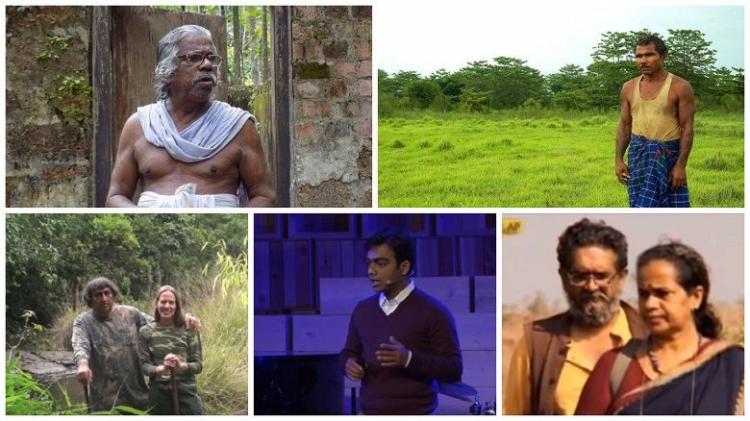
The award-winning Eco-Tree Project based out of Chennai and the backyard forest creating startup Afforestt of Bengaluru and their efforts to create forests in the urban jungle needs to be lauded on this day celebrating Forests and Sustainable Cities.
But on the day celebrating the Forests as well as other days we need to give thanks to the many forest makers of India need do our little bit to help the cause.
(c) The News Minute
The efforts of these people as well as the natural advantage have helped ensure that India is among the Top Ten Nations in the World with regard to Forest Cover as per the Ministry of Environment, Forest and Climate Change report India State of Forest Report (ISFR) 2017 released last month.
Overall mankind will benefit once we start valuing the tree and forests - transitioning from a hydrocarbon driven economy to a carbohydrate driven one would enable more equitable development, as mentioned by Dr.
Ranil Senanayika, Sri Lankan proponent and pioneer of Analog Forestry at the 5th Asia Pacific Adaptation Network Forum in Colombo in October 2016.
More information on the benefits of urban forests in cities @ http://www.un.org/en/events/forestsday/
Mankind is selfish so let's put a price to our trees and forests: think of the value of the tree and forests - considering the cost of an oxygen cylinder - A human consumes oxygen worth Rs. 130,000 per day so the value of the oxygen producing plants, trees and forests are priceless. Save Forests!