Showing posts with label India. Show all posts

Thursday, 30 July 2026

Earth Overshoot Day 2026


30 July 2026 is Earth Overshoot Day for this year. As mentioned in the post during the COVID19 pandemic when earth overshoot day was pushed to 22 August 2020 due to the restrictions of lockdown: 

Earth Overshoot Day marks the date when humanity has exhausted nature's budget for the year. For the rest of the year, we are maintaining our ecological deficit by drawing down local resource stocks and accumulating carbon dioxide in the atmosphere. 

The result of overconsumption, extractive policies, overexploitation of resources, use-and-throw lifestyles, linear instead of circular economies and of course unsustainable development.

Perhaps there is a message that Earth Overshoot has been falling in July, a month observed as "Plastic Free July" centering a RE-Plastic (REplacing, REducing, REcycling & REusing Plastic) Lifestyle. Eschewing the throwaway (single-use/disposable/wasteful) culture will go a long way in extending natural resources longer into the year - thus delaying our dependence on resources of future years and generations. 


Illustration Credit: Global Footprint Network 2026, www.overshootday.org and www.footprintnetwork.org


With wars in multiple parts of the world literally burning through resources explosively, it seems counterintuitive that earth overshoot day is nearly a week later this year. While we would tend to pat ourselves in the back that last year's earth overshoot day fell on July 24th 2025 and in the Fire Horse Year 2026 it has been pushed back almost a week to July 30th 2026, it must be noted this is just an accounting correction due to "upward data revision in the Ocean Carbon Absorption" rather than significantly improved resource conservation and ecological restoration (see image below for AI summary of why this stretch happened):

See more at: https://overshoot.footprintnetwork.org/newsroom/country-overshoot-days/

If the whole world lived like Indians , we won't overshoot the earth's budget of annual ecological resources, see this DWTV's coverage of Earth Overshoot Day 2025: 


  • Data Revisions: Upward adjustments to ocean carbon-absorption metrics and minor account updates shifted the baseline calculation 8 days later.
  • Real-World Change: Actual rising human consumption widened the ecological deficit, pushing the date 2 days earlier.
  • Net Effect: Combining the +8 day data correction and -2 day consumption acceleration resulted in the net 6-day calendar delay.
  • True Trajectory: Despite the later calendar date, resource consumption pressure worsened, making 2026 the highest state of ecological overshoot to date.


As mentioned in the DWTV report, less waste, more recycling, reducing food waste, overconsumption and shifting to green energy all will help push back Earth Overshoot Day. 


Thus centering a Circular Economy model, slow fashion, zero-waste, Net-Zero eco-conscious lifestyles - Sustainable Development - will make us live within our planetary resource budget. This way of life itself is Climate Action - SDG 13 as the ecological footprint and carbon footprint of our lives shrink. This is much needed in a world bearing the brunt of climate change. 


It's easier said than done as there are entrenched systems that pushback on changes in consumption patterns. This video by creator AliMcForever "Burning Carbon" explains it succinctly:


Here's to hoping that we can shift to a more ecologically conscious and environmentally freindly way of life thus living within our planetary resource budgets!

Tuesday, 7 July 2026

Tackling the Monsoon Mayhem

 July brings monsoon to a large part of India and heavy rains in many parts of the world. While a welcome break from extreme heat and heatwaves, monsoon brings its own kind of mayhem. 

And considering India is a water-stressed country that has overdrawn its groundwater as well as having large parts of the country in drought and drought-like conditions saving water is always a priority. This is the situation in most regions of the world. Even in flood-prone weather communities and governments need to remember to 'Catch the Rain'.


Catch the Rain Pledge of Government of India 

The Government of India during the period of March 22 to November 30 has called for efforts to enhance rainwater harvesting and 'Catch the Rain'. The Jal Shakti Abhiyan's Catch the Rain (JSA:CTR) campaign calls for 
  • Water Conservation at the household level
  • Rainwater Harvesting from the household and community levels all the way to the state and national levels
  • Mapping and Geo-tagging Existing Water Bodies Across the Nation
  • Reviving and Restoring water bodies and wetlands
  • Afforestation (Especially in watershed regions)
  • Water Security and Conservation Education
  • Jal Shakti Kendras - district level centers for water management information

EcoBloc & Rainwater Harvesting

The above The Better India reel shows the "smart drain" EcoBloc made using recycled plastic that harvests storm water. A solution by Chennai's R.R. Sivaram implemented in thousands of locations across Tamil Nadu and India harvesting millions of liters of rainwater from surface runoff.  - a win-win for SDG 12 and SDG 6 - responsible consumption and production of plastics and water - ensuring clean water and sanitation in drier non-monsoon periods. 


Sponge City Model

The Sponge City model of flood mitigation and rain and storm water harvesting is mentioned in the last post of May 2026 (28 May 2026), "Ecomodernism in the lead up to Environment Day."

Sponge cities are prime example of nature-based solution. Tested by Chinese Landscape Architect Kongjian Yu (who passed  away in September 2025) in 30 cities in China with plans for over 500 more. It includes harnessing

  • porous pavements, 
  • green rooftops, 
  • rain gardens
  •  wetlands 

to manage water, support biodiversity and improve air quality.

Reviving Water bodies and Wetlands

A major reason for both Heat Island Effect and increased instances of floods in urban areas is the encroachment and mismanagement of water bodies and wetlands. Thus whether in Summer or in Monsoon weather-proofing requires healthy wetlands and water bodies. The bonus of healthy water bodies and wetlands is the boost to biodiversity - a boost to Life Below Water (SDG 14) and Life on Land (SDG 15). 

Enhancing Watershed Areas


Water security is holistic and involves securing water resources, forests, wetlands, soil and biodiversity from overexploitation. Watershed management is vital to water security. Especially ensuring natural resources in rain-fed and rain-collecting areas that replenish both surface and ground freshwater resources is vital to ensure human security and sustainable development - especially SDG 6 and SDGs 13, 14 & 15. 

A Climate Resilient & Water Secure Future 

While being inundated by news of floods, landslides and infrastructure destroyed by heavy rains, cloudbursts and thunderstorms one is always reminded of the power and fury of nature and the man-made disasters we create by destroying natural protection against such monsoon mayhem. 

Revived and restored floodplains, wetlands that function fully as the sponges to storm water that they are and, forests and grasslands that anchor soil and prevent landslides are vital to survive the monsoon. Most especially in the watershed regions but also in urban areas where man-made flooding has become the norm rather than the exception from Millennium City (Gurugram) to Maximum City (Mumbai) to our Software and Startup Hub (Bengaluru). 

Reviving Shola grasslands in Nilgiris and the Western Ghats, protecting and restoring rainforests and forests in hill and mountain regions as well as checking unsustainable urbanization in sensitive ecosystems by fostering Sustainable Cities and Communities (SDG 11) instead would ensure a climate resilient and water secure future for us all.


Big Apple First

The news of a planned Urban Forest in New York is a step in the right direction. In a city with such a high real estate value per square feet the declaration to prioritize greening to make the Big Apple climate resilient is a signal to the rest of the world. If New York and its NYC Urban Forest Plan can afford t make space for 30% tree canopy by 2040 then any other urban center can do it too. 


In the midst of news about the heatwaves in Europe I read about what a privilege it is to be able to see three trees out of your home, school and workplace. A globally recognized pillar of urban planning and healthy living: the 3-30-300 rule put forth by forestry expert Cecil Konijinendjik. The core of which includes
  • 3 trees in view 
  • 30% Canopy Cover 
  • 300 meters to a Park 
This metric is failed by most global urban centers according to a Nature journal research. 
I realize how privileged my life is that my part of the world checks off this 3-30-300 metric.  Perhaps if more places met this criteria there would be less news of monsoon mayhem, wildfires or heatwaves. 


Sunday, 28 June 2026

Some Solutions for Simmering Cities: SDG 13

 In the news: an Extreme Heat event at London Climate Action Week (June 20-28, 2026) was cancelled due to Extreme Heat! If that isn't a scream for Climate Action (SDG 13) from our fast warming planet due to our actions I don't know what is!

First World Problems Lead to Action

Europe and North America's infrastructure is geared towards surviving winters rather than facing extreme heat and heatwaves in summer. As our climate crisis was in large part a legacy of the Industrial Revolution and industrialization originating in the First World (read: UK, Europe and USA and Canada,... Japan not so much!), climate action there and a policy shift towards a circular economy model will boost sustainable development and climate adaptation like nothing else.  

Just as urban centers are perceived as the loci of effective climate action and climate policy locally and nationally, globally the First World - the Developed Countries are seen as climate action and more importantly climate finance hubs.

The series of extreme weather events that are not the norm -- Extreme Heat in UK and Europe (midsummer 2026), heavy rains and landslides in Switzerland in 2024, and hailstorm and flash flooding on an Idaho summer day in the United States (June 2026) -- could demonstrate the urgency related to the climate crisis right at their doorstep and prompt climate mitigation, climate adaptation and climate finance. 

European Climate Action

In the short term creation of public cool hubs, crocheted shades like the one's done by Spanish grandmas - senior knitters in the heatwaves of 2024 are temporary fixes to the extreme heat crisis.

Talking long term, Spain's transition to solar energy with massive investment on revamping its grid to accommodate electricity generated from renewable sources is a huge win for climate action. Barcelona's affordable and climate smart housing is a great example of Climate Action and Just Transition. Spain is a bit of a poster child of climate action and just transition as it has long been facing extreme weather events (forest fires, flooding, heat waves) and economic crises which it has through recent policy sought to tackle together -  sustainable development and just transition - climate justice for all!

Germany and the UK demolishing and retiring their coal-fire/thermal power plants also massively cut their carbon footprint. The growing contribution of renewable energy in American, British and European is both about energy security (while war rages in regions producing and in shipping routes of fossil fuels) as well as climate action through putting climate policy into practice.

Germany's super efficient waste recycling system (Gruener Punkt system since 1990) is another great example of the circular economy and success stories of both Responsible Production and Consumption (SDG 12) and SDG 13.

How India Beats the Heat

Tamil Nadu's Cool Roof Initiative promoted by UNEP award-winning TN Environment Secretary Supriya Sahu as well as a growing chain of climate-proof rest hubs for gig workers across India as well as insurance for income lost due to extreme weather are some concrete actions to tackle extreme heat across India.

The cool roof initiatives - painting the roofs with reflective weather-sheild white coating cools the temperure up to 5 degrees and is getting popular in lower income urban islands across India. It's a Just Transition win.

Reclamation and restoration of water bodies across India and Miyawaki Forest planting across urban India also counters the Urban Heat Island effect.  But there initiatives are few and far between. 

Heat Action Plans and Heat Emergency Rooms in place also tackles emergency situations that arise across Indian Summers both in northern dry heat hubs and southern hot and humid regions. 


The Climate Crisis Discriminates 


Climate Action Now


Climate Justice & Just Transition 


On 1 June 2026 Global Parents Day (though India & US celebrate Parents Day on 26th July - 26-7-26) was observed. As the climate crisis triggers extreme weather it puts older parents at risk and young people are actvely rethinking actually becoming parents.  

Thus climate action like curbing individual, family, community and national carbon and ecological footprints is a great step forward. 

As mentioned many times on this blog since January 2019, you can calculate your carbon footprint and work out how to adopt an ecofriendly lifestyle with Only Planet. 

A sustainable mode of transport is a great place to start and the fact that World Bicycle Day was observed on 3 June 2026 with the theme: “Cycling for a Greener Future” is another obvious hint from the universe to adopt a sustainable way of life. 


In a bit of good news the fact that Earth Overshoot Day is nearly a week later in 2026 than in 2025 is an indicator of a small step to responsibly use the planet's resources. Its on 30 July 2026 where last year we began living on borrowed resources on 26 July 2025 itself.


Saturday, 11 December 2021

South Asian Perspectives on Sustainable Mountain Tourism: International Mountain Day 2021

The hills are calling but when we answer the call sometimes we find the popular mountain tourist destinations full of trash and traffic. Invariably what's popular in these places are big-chain hotels, big-chain souvenir shops and super-markets. As a result a very small fraction of the tourist money trickles into the pocket of locals who bear the tax burden and inconvenience of living in a congested and trashed tourist mountain haven. Thus, in this gap between COVID waves as people flock to mountain escapes is an apt time for the theme of International Mountain Day 2021 to be Sustainable Mountain Tourism.


 So what is Sustainable Tourism?

Sustainable tourism is defined by the UN Environment Program and UN World Tourism Organization as “tourism that takes full account of its current and future economic, social and environmental impacts, addressing the needs of visitors, the industry, the environment and host communities.” 

So how is this operationalized: Stay in local homestays and non-chain locals-owned hotels, buy souvenirs and local produce from the locals and commit to be a responsible visitor. See more on eco-tourism in this article by Ramala.

When we ensure sustainable tourism in the hills, hill stations and mountain-top tourist paradises, we ensure that leave behind only footprints and pleasant memories with their mountain hosts. This ensures that tourism there achieves a range of sustainable development goals (SDGs): 

SDG8 - Sustainable livelihoods enshrined in the  principles of sustainable tourism ensures Decent Work and Economic Growth in the mountain destination. 

SDG11 - the organization of a Sustainable Community supported by sustainable livelihoods generated by responsibly used tourist money.  

SDG12 - Responsible Consumption and Production of resources in the hill-top tourist draw. 

SDG13 & SDG 15 - Through Sustainable Mountain Tourism which puts protecting the tourist spot's environment and making a conscious effort to reduce the ecological and carbon footprint of the presence of tourists there even as the tourist money flows into local pockets and institutions that sustainably develop, protect and restore the sensitive mountain ecosystem achieves both Climate Action and champions Life on Land.
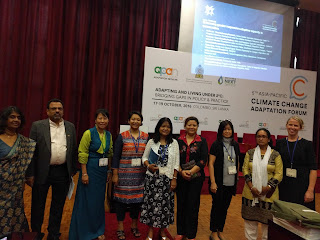


Former mountaineer, Ms. Tshering Uden Bhutia is a community leader from West Sikkim. She works with the community organization Khangchendzonga Conservation Committee (KCC) to promote eco-tourism in Sikkim, particularly in the trails leading up to Kanchenjunga, the third highest peak in the world and sacred to the both countries it straddles (Nepal and Sikkim in India). Uden and KCC have promoted Sustainable Mountain Tourism in Sikkim which has helped build resilience and create a sustainable community with sustainable livelihoods in the Himalayan state through a wide variety of activities. Uden has represented her state and organization in many fora but the APAN forum (5th Asia Pacific Climate Change Adaptation Forum in Colombo, Sri Lanka, October 17 to 19, 2016) was her first international venture.  She part of the panel in the parallel session “Enhancing Gender Responsive Adaptive Capacity in Communities” on the last day of APAN 2016.

  The social entrepreneur from Yuksam in West Sikkim, Uden has been involved with sustainable livelihood projects and waste management for over twenty years and her efforts are embody the core principles of Sustainable Mountain Tourism, the theme for International Mountain Day 2021 (December 11) . Her love of the mountains translated into community leadership. She hails from the Himalayan state of Sikkim, in a district at the base of the sacred and majestic Kanchenjunga. And leads the Khangchendzonga Conservation Committee (KCC) which “comprises of community representatives, community based organization and other key stakeholders highly committed toward nature conservation.”

In her childhood Uden’s family tearoom served varieties of dishes using Maggi 2-Minute Noodles. And over her lifetime she witnessed the noodle wrappers take over her home. While climbing the peaks as well the debris consisted of food wrappers. Instant noodles and other instant foods cooked with just hot water are a great convenience for mountaineers and for people cooking in the open.  It is used everywhere and is the fast food of choice as it is both easy to carry and easy to cook. Yet the plastic wrappers leaves a non-biodegradable wake behind tourists, trekkers, and mountaineers for only a fraction committed to “leaving behind only footprints.”

Since 1997, as a personal contribution to reducing waste she decided to avoid Maggi products and the like.  She made her own instant noodles and carried it in reusable containers that she brought back, without littering in her wake. She opted for fruits and nuts to processed foods and though it was hard and sometimes expensive – and literally extra baggage, she developed and fully committed to the pro-planet habit.  For as the KCC website puts it,

Conservation cannot happen with an empty stomach, hence KCC strongly believes in providing livelihood support to mountain people and facilitating them for alternative livelihood with minimum impact on nature and the rich culture, thus creating a win win situation among nature and its people.

KCC conserves natural and cultural resources through skill development programs, micro planning, awareness campaigns, monitoring of natural resources as well as by advocating for appropriate policy changes. Through KCC and other community level activities Uden now has more waste management, reducing, reusing and recycling programmes. The habit turned into a job creator and in turn she and other community leaders build pro-planet skills and capacities through training, exposure and other participatory means.

Source: http://www.redelephantfoundation.org/2017/01/being-pro-planet-taking-personal.html

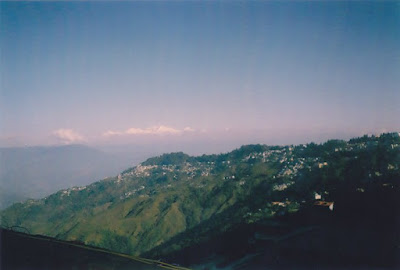
View of the snowy peaks including Kanchanjenga from the hill-station Darjeeling, West Bengal 2010 (My Mum's photography).  


Coming from a coastal tropical metropolis (Chennai, Tamil Nadu, South India) I travel to mountains to experience a different ecosystem to my usual urban, coastal and hot one with limited wildlife and biodiversity. I also heed the call of the mountains to experience the beauty of the night skies, the thrill of experiencing snow fall and finding a cozy rest stop in the cold clime and enjoy the famed hospitality of communities from hills and their unique and delicious cuisine. For this reason I prefer homestays, engaging local guides to take us to the tourist spots and the little-known pristine spots teeming with all things wild before shopping and eating in local markets and eateries for an authentic experience that also puts my money in the hands of the hill-station's residents.

These are Indian perspectives, I asked a few people in the hospitality and travel sectors in hill stations in other parts of South Asia and they came through with great insights:

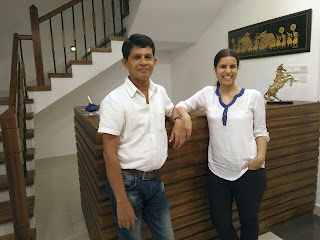
View from the rooftop, Idyllic Vista (indeed!), Kandy, Sri Lanka

Devika Fernando, Author & Innkeeper along with her husband Thushara Fernando from Kandy, Sri Lanka had this to share: 

“Kandy is a city surrounded by hills and mountains. Naturally, that means some guests want to go on hikes. Our inn is situated high up in Hanthana so it's a good starting point. Sustainable tourism in the mountains is something that's close to our hearts. My husband and I always advise our guests not to leave any trace of themselves behind - that especially means no littering! Not taking anything from the ecosystem back with them is just as important. Nature should be observed, not disturbed. Staying on the hiking trails is advisable too, for the tourists' safety as much as for all the animals that call these misty mountains their home.”

*

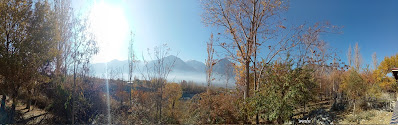
View from the window, Gilgit-Baltistan

Syedda Ramla the mompreneur from Gilgit-Baltistan, quoted on her eco-tourism article before had this to share: 

"My name is Syedda Ramla and I own BetterBonds, an online shop for 'Himalayan Medixine' which is my modern take on traditional healing with plants, crystals and honey. I make gemstones jewelry and herbal tea and balms. We are at http://instagram.com/betterbonds. Hit us up!

 I migrated to Gilgit-Baltistan from the coastal Karachi in 2013. What pulled me was the quest to experience and observe an earthy, handmade life that was ecologically integrated. I was fascinated by handmade homes, a connection with cattle and produce, a high dependence on seasonality, and the opening of the Self to the elements. I admit, I also love the thrill of living on the edge; I love what it demands of our person and psyche. I passed some tests and failed others.

 For those who are on such 'soulular' quests, this region can provide one of the last few such remaining opportunities on our otherwise rapidly modernizing and gentrified Earth. But I warn you, this place, too, is changing and that is why we need more of those travelers who think in sustainable and earthy ways. That to me is the true potential of the place.

 Unfortunately, unlike the rest of Himalayan nations and regions, Pakistan is still not seeing this opportunity fully or comprehending the nuances of it. We still have a police state approach, we still give tourists the stink eye and ask: "Why are you here? Why are you traveling? Why aren't you back home with your Momma?" I have seen this too many times to be comfortable in pretending it is otherwise.

 On the other hand, Nepal and India for instance wholly grabbed the hippie movement, for instance, by the horns and steered it fairly usefully. As a result a whole counterculture was born, and tourists are attracted in hordes to those regions. We are still behind. There is favoritism for Whites. Our local tourists are neither informed nor regulated.

 I would wholly advocate a restricted tourism approach to protect ecology: Issue a number of passes per year, and make economy options available. Brief people well. Grab the moment and speak to them about environmental concerns, make it mandatory to run a drill on each bus' communication system, make it pleasing. Why not? This is entirely possible.

 Finally, folks, come here for Autumn and come well-prepared. The goldens, browns, reds, last greens on the trees are lovely. The angles of sunlight are ephemeral as seen in the above picture from my home a few days ago (December 2021)."

So remember, next time you heed the call of the mountains, tread lightly, ecologically speaking and travel responsibly and leave the paradise, if not better than you found it at least as wonderful as it was when you got there!

Tuesday, 1 May 2018

SDG7 for India’s Energy Security, Poverty Alleviation & Sustainable Development

Access to affordable and clean energy - the seventh sustainable development goal (SDG7) is central to enhancing the growth of developing nations in general and India in particular. 

Having renewable energy sources, such as solar, wind and small hydroelectric (hydel) as well as biogas, power the nation instead of fossil fuels can help avoid the environmental Kuznets curve (EKC) hypothesis. According to EKC theory, as per capita income first increases there is proportional detrimental effect on the environment. This makes for unsustainable development. Decoupling growth from fossil fuels, enhancing clean energy generation and cheap power for all can fillip to India’s developmental agenda and ensure energy security free from crude oil price and supply fluctuations. India like most developing nations has poverty alleviation by raising the per capita income of those below poverty line (BPL) as a key mandate. India according to the World Bank has the most number of people living BPL. That's 30 percent of the Indian population – approximately 276 million people! Improving the quality of life of this huge population will have a grave impact on the nation's and the world's environment and resource consumption. This can be averted by leapfrogging to powering the growth with clean energy.


 The low-carbon growth model prioritizing clean and affordable energy access, although requiring a huge initial investment, can yield phenomenal results. Energy security, poverty alleviation as well as sustainable development can become the norm in India's growth story when clean and cheap energy empowers the population. Energy security is a very important issue. The aggravating effect of fossil fuels on climate change and global warming makes them a poor choice to fuel growth in India and beyond. Coal that powers thermal power stations – the mainstay of India’s electricity grid – causes severe air, water and soil pollution in addition to taking a huge bite out of the limited carbon budget of an ever-heating world. With the soaring crude oil prices, oil’s exponential effect on global warming and the worrying trend of a significant portion of oil money funding terror – it’s wrong on multiple fronts to continue to couple our growth story with the use of fossil fuels. Gas extraction for LPG and LNG ( (liquefied petroleum/natural gas) cylinders routinely devastate the local environs yet ensure smoke- and air pollution–free cooking fuel and an affordable and greener choice of vehicle fuel. By promoting small and large-scale biogas and “Gobbar” [cow patties] gas plants families and communities can benefit from clean cooking fuel as well as generating a rich organic manure as byproduct. LNG cylinders filled in industrial-sized “washed biogas” plants with adequate safety regulations are less ecologically damaging than oil and gas extraction from the soil and river beds.

 Making the Indian power grid compatible with renewable energy supply by investing in optimal energy storage and smart grids can drastically improve India’s carbon footprint and clean up the environment.  India’s abundant solar and wind power generating capacity not to mention the potential of offshore hybrid renewable power generating installations – harnessing tidal, wave, offshore wind and solar energy – can easily offset the Indian power grid’s coal needs.
PM Modi said on Sunday that April 28 will be remembered as a historic day when a remote village in the northeast became the last to be connected to the power grid.
 Despite Power Ministry Officials putting this figure at 83% households electrified - with 15 % of this through battery based off-grid solutions and the rest on grid-connected - the environmental and health implications of such a demand if still powered mostly by thermal power is mind-boggling.
  Source: (c) The Hindu

With the World Health Organization stating that over 90 percent of the world’s population breathes polluted air, the health premium of fuels that cause air pollution skyrockets. Some of the most polluted cities in the world are in India and combined with the huge BPL population – who are most vulnerable to pollution – India is on the brink of a major health crisis. Poor indoor and outdoor air quality are claiming lives and causing morbidity. The healthcare costs and the lost man-hours adds to the “cost of pollution” - devastating the efficiency of health & safety of the laboring classes especially (a barriers to truly honoring the values enshrined in observing May Day). Hence clean energy access in India can ensure that that the nation’s growth is a healthy and sustainable one. There are many individuals and organizations that are pioneering and piloting adoption of clean energy and low-carbon growth models. These successful pilots need to be scaled up and replicated nationwide to power a clean energy revolution to power India's epic growth story.

Source: (c) Greenpeace India - Chennai #GoSolar event, Earth Day 2018