Saturday, 1 May 2021

Our Feathered Friends


Spring is celebrated in many forms around the world and across India. The season of rebirth and re-greening is deified in many cultures and mythologies of goddesses of spring and fertility abound.  It dovetails with the regional celebrations of New Year and Harvest in the Indian subcontinent and neighbourhood (Puthandu, Vishu, Chaitra Navratri, Ramadan, Cheti Chand, Pratipada, Jur Sital/Jude Sheetal, Baisakhi, Navreh, Bikoti, Bohag Bihu, Cheiraoba, Poila/Bengali Boishak, Sajibu nongma panba, Pana Sankranti, Naba Barsha, Sarhul, Gudi Padwa, Ugadi as well as Avurudu/Aluth Avurudda/Sinhala New Year & Songkran/Thai New Year or Water festival of Myanmar, Laos & Cambodia)


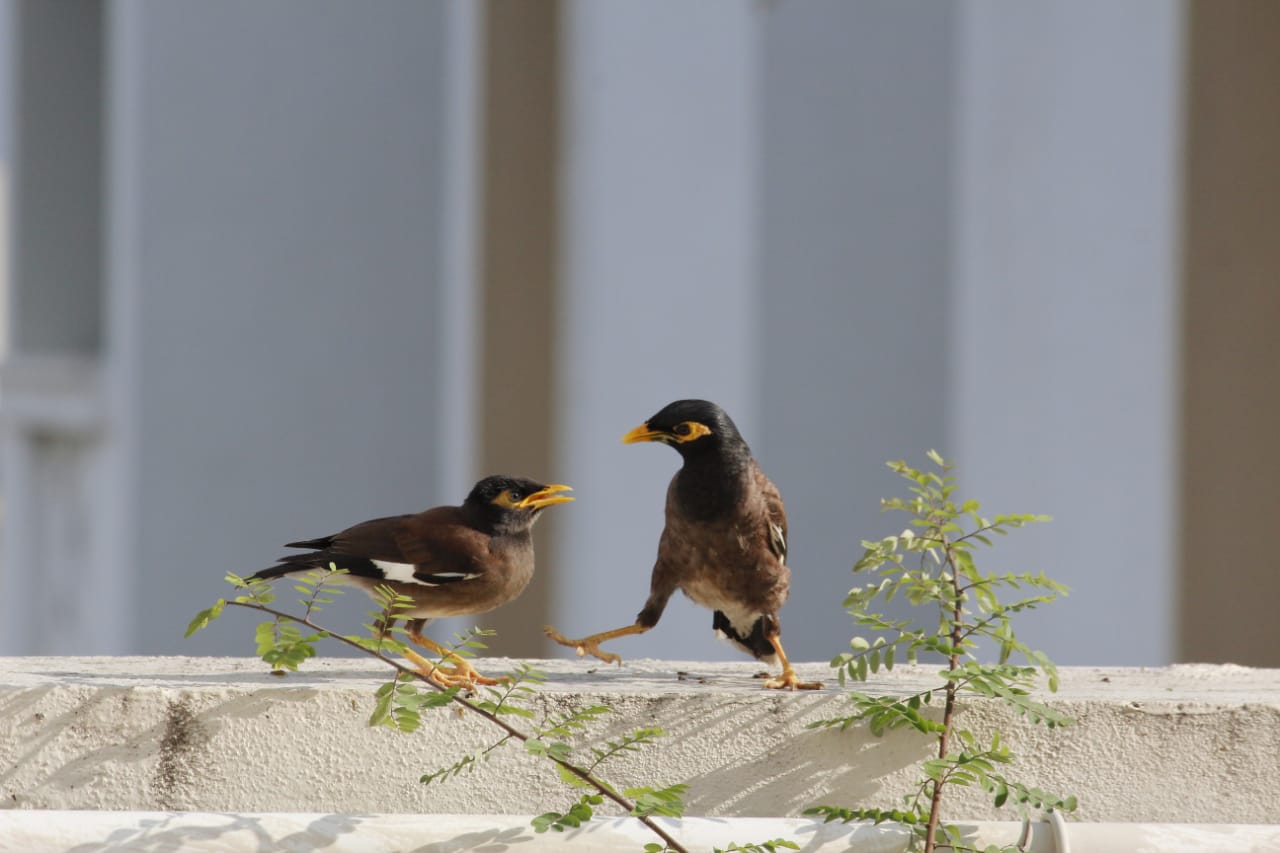
 March 20, which is the vernal equinox in the Northern Hemisphere is observed as World Sparrow Day as well as the International Day of Happiness. As I tweeted, this is apt as observing sparrows makes me happy.


I'll elaborate, bird-watching makes me happy and nothing makes me happier than spotting them in my backyard and garden. My interest in nature and the environment was kindled by feathered visitors who appeared in my childhood campus which was filled with greenery as well as being close to the beach. Sparrows used to regularly fly into our flat and my bedroom and investigate the mirror on my Godrej almirah  (steel cupboard) and the braver ones used to even sit on me as took an afternoon nap. The very best memories. 

The fact that my school campus also abounded with fruit trees teeming with bird life and the occasional monkey gangs added to my early interest in bird life. So yay again for Sishya - the best school in my opinion for so many reasons those days. I always looked forward to meeting my friends and feathered friends there and hated missing even a day of school. 
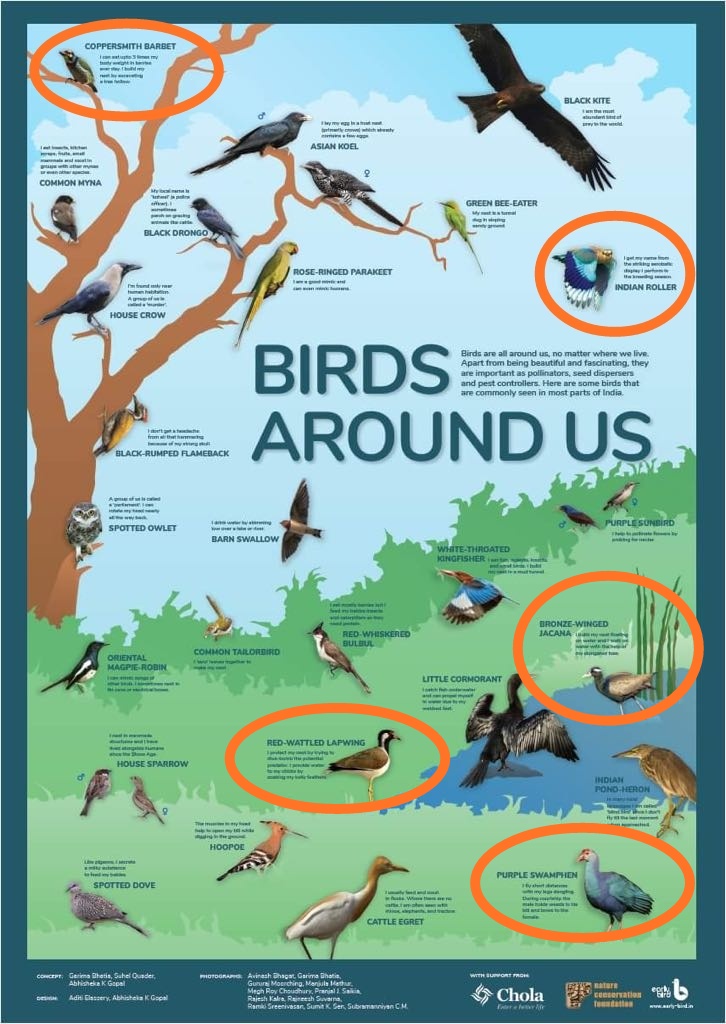


In my present residence although I am further away from the beach, thanks to a survival of the fittest garden, I get a lot of winged visitors - both birds and bats!!! As writer and birdwatcher Christy Bharath tweeted with the wonderful video compilation of ECR birds - the East Coast Road is not just a scenic route but a birder's paradise.


But it is our feathered friends who brighten the day as the noisily welcome dawn and dusk as well as being extra active during springtime. Here, inside my home, its tailor birds who are more frequent visitors and it is only this past year that a couple of sparrows have entered. They are cherished whether I come across them inside or out. My vision might be poor, but while I may look through/overlook people and inevitably fail to recognize them immediately when coming across them unexpectedly, birds always catch my eye, especially unexpected sightings. 


Be it Ostara/Eostre, the Goddess of Spring (Eastern European/Germanic/Wiccan) and her celebration of rebirth co-opted in Easter as shown in the series American Gods or the return of the Greek/Roman Spring goddess Kore/Presephone, from her time in the underworld with her husband Hades to her mother the Goddess of grain and harvest Demeter (the Webtoon, Lore Olympus retells this beautifully), spring is made glorious by greenery,  gardens, grain and birdsong. 

The book Effin' Birds by Aaron Reynolds and Twitter handle @EffinBirds combines beautiful bird illustrations and pithy profanity both very useful in making one feel better. 


Pic: Shikra
Pics: Sunbird nest and sunbird in flight and on a Hibiscus branch.

Pics: Tailor Bird fledglings/chicks - newly hatched in Hibiscus leaf nest.


Pic: Water Hen on my garden wall.

I am spiritually enriched by the presence and appearance of our feathered friends. The extract from Dorothy Francis Gurney's poem God's Garden beautifully rendered as a glass painting pictured at the start of this post resonates with me. And recent research has found that birds give people as much happiness as money in the bank! In these days of high uncertainty and high anxiety due to the devastation of the COVID-19 second wave, simple pleasures are worth their weight in gold.

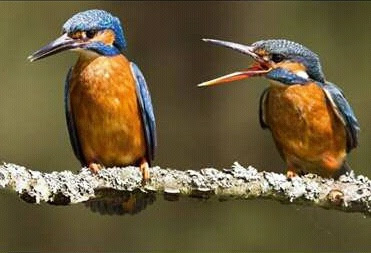
It is only over the past six years that I recognized and distinguished bird calls especially the laugh-like call of the Kingfisher. The Laughing Kookaburra song which I learnt in junior school suddenly made sense - the laughing jackass after all is a relative from down under. Thanks to the internet and the resources it has made available, school kids and those interested can get to learn a lot more even without first-hand bird encounters. 

Socially distanced bird walks still happen in the city (Check out EFI events #NativesOfOurLakes), but apps such as e-bird make it easier still. Rohan Chakravarthy summarizes it best in his cartoon from last April, during first lockdown, professional bird-watchers feel the pinch but balcony bird-watchers reaped the benefit of the forced slowing down of life that made many of us look up from devices and appreciate the natural world. 


Source: Green Humour, April 4, 2020.
Rohan's book for the Bombay Natural History Society, Bird Business is a delight as are all his cartoons especially those related to bird-watching!

As we are buffeted by the daily realities and perils of the pandemic, let's look to nature and nurture it, so that it may nurture us. As summer approaches and the heat and humidity becomes unbearable thanks to global warming and the climate catastrophe we have precipitated, remember to set out water for our feathered friends. Every little bit helps, for birds and beasts - as the actions of the Water King of Kenya for the past five year's drought season demonstrates. 


Wednesday, 3 March 2021

World Wildlife Day 2021 and SDG 15

 World Wildlife Day is annually observed on the 3rd of March. The theme for WWD 2021 is "Forests and Livelihoods: Sustaining People and Planet" which dovetails beautifully into the 15th Sustainable Development Goal (SDG 15): Life on Land. Linking forests and livelihoods and syncing people and planet is vital step to ecosystem restoration which is the theme of 2021-30: declared the UN Decade for Ecosystem Restoration.


Many vital forests, especially rainforests highly at-risk frontlines in the war against climate change are being destroyed as local communities haven't been made stakeholders and shareholders in the survival of the biodiversity hotspot. We need economic innovations like the payment for ecosystem services (PES) model adopted by Farmers for Forests.  It truly exemplifies the spirit of "Forests and Livelihoods: Sustaining People and Planet" while enabling Life on Land: 

"Protect, restore and promote sustainable use of terrestrial ecosystems, sustainably manage forests, combat desertification, and halt and reverse land degradation and halt biodiversity loss. A flourishing life on land is the foundation for our life on this planet."


Forest fires both natural and those set by encroachers and miscreants are a major hurdle to survival of forests. While the forest fires in Australia, the Amazon and the haze-making ones in the rainforests of Southeast Asia make news more immediately, the ones in our backyard, like the fire in Simlipal Tiger Reserve located in Mayurbhaj in the Indian state of Odisha is less well-known yet equally devastating for at-risk wildlife including India's national animal. 


Livelihoods need to be linked to protecting forests in order to make protecting the planet profitable to the people living in the laws of poverty alongside forests. Asoka changemaker Muthu Velayutham's efforts has always addressed this dichotomy and his latest venture Vaigai Flora Botanical Gardens in the outskirts of Madurai, a rich spread of vital native species forest home to vibrant biodiversity of flora and fauna. 

There are many initiatives restoring ecosystems and forests fragmented by tea plantations and coffee estates. These need to be popularized and scaled up so that we can fight poverty and climate change while ensuring that life on land thrives (SDG 1, SDG 13, SDG 15) hence ensuring the triumph of the WWD 2021 theme.


Tuesday, 2 February 2021

Wetlands & Water: World Wetlands Day 2021

 Wetlands sustain life. Wetlands protect life. The day of adoption of Ramsar Convention protecting wetlands, February 2nd, has since been celebrated as " World Wetlands Day." The 2021 theme is Water and Wetlands both vital for survival and both used up as urban centres sprawl to take up what used to be vital wetlands that have sustained life and livelihoods for centuries.


According to the Ramsar Convention, the inclusive definition of Wetlands is as follows:

“…wetlands are areas of marsh, fen, peatland or water, whether natural or artificial, permanent or temporary, with water that is static or flowing, fresh, brackish or salt, including areas of marine water the depth of which at low tide does not exceed six metres."

This inclusive definition is important in the quest to protect what's left of the wetlands - these teeming biodiversity hotspots because so many cities - metros and capitals have been built on or around what used to be massive wetland systems. 

Dismissed as "swamps," drained of water and later pumped full of concrete our "urban planners" of the past have created water scarce cities that are ironically flood prone as well. As the cooling water, flora and fauna of the marshes were replaced by concrete cities urban heat islands flourished negating the wetland carbon sinks and adding to global warming and the climate emergency.


Last year, the Ramsar-Bonn connect was highlighted just before the pandemic ground the world world to a halt, at the 13th conference of parties to the Bonn Convention of migratory species of wild animals, hosted in India: 10 wetlands across India were designated Ramsar sites or "wetland sites of international importance."

Migratory birds in salt marshes - Rann of Kutch

Hopefully as the powers that be commit to sustainable development, our wetlands will be protected and future cities will all be sustainable cities not just "smart cities." Wetlands and water are inseparable and if we are to tackle the climate crisis we need to put protecting wetlands at the heart of climate action. 

Wetlands are water reservoirs, natural flood prevention, vital carbon sinks as well as sustaining a vast array of biodiversity. Urbanization is an inevitable consequence of modernization but if mankind is to survive our cities shouldn't grow at the cost of wetlands. Another consequence of urbanization and modernization is the growing plastic crisis - plastic waste is as dangerous to the health and survival of wetlands as marine plastic is to oceans. But, there are many efforts underway to remove plastics and landfills from our wetlands as well as efforts to stop plastic from ending up in wetlands in the first place. 

How wetlands manage water: Wisconsisn

Wetlands are the final defense against the intensified flood-drought cycle caused by climate change. Cities running out of water is an ever-recurring crisis across the planet and wetlands, as shown in Kolkata and Kochi, can be vital in ensuring water security and SDG 6 (Clean water and sanitation) in cities. After the Chennai Floods back in 2015 and the Vardah Cyclone the following year, many people saw first hand how fast the Pallikarnai Marsh absorbed flood waters, yet we continue to encroach upon it with concrete and garbage to expand this already water-starved flood-prone city of Chennai. 


Protecting wetlands is ensuring water security and water security spells human security. Thus it is in the interest of mankind to SAVE THE WETLANDS!


Friday, 21 August 2020

Earth Overshoot Day 2020 is Madras Day 2020: August 22


August 22, 2020 is both Madras Day locally and Earth Overshoot Day globally. As the coastal metropolis, Chennai formerly known as Madras celebrates its 381st birthday, the COVID19 pandemic's global lock down and quarantines has pushed the Earth Overshoot Day by 24 days to August 22nd. 


Earth Overshoot Day marks the date when humanity has exhausted nature's budget for the year. For the rest of the year, we are maintaining our ecological deficit by drawing down local resource stocks and accumulating carbon dioxide in the atmosphere.

 The coronavirus that affects the respiratory system of living things has affected the global transportation infrastructure disrupting supply chains and reducing human consumption. At the start of the pandemic there were many stories of wildlife reclaiming urban spaces and hope of our earth's environment healing and climate stabilizing. The disruption of aviation, shipping and transport sectors had reduced the fossil fuel consumption as well as generally resource intensive products. Local suppliers and locally grown food have addressed the shortfall. 

Yet for all the disruption to our lifestyles and the economy our consumption still outstrips our planet's resources by a whole quarter. So the priority as we envision the post-COVID19 world is to be responsible and sustainable in our consumption and production (SDG12) so that we #MoveTheDate of Earth Overshoot Day to the year end. Thus we stop borrowing and living off the resources of future generations: 

https://www.facebook.com/2040Film/videos/2583969951914239


As Chennai celebrates 381 years a future as a Sustainable City, Sustainable Community (SDG11) as well as a Smart City needs to adopted. Chennai's coastal position, expansion eating into vital wetlands, and dependence on ground water we are vulnerable to the buffets of global warming, climate change and climate catastrophe. The flood-drought cycles, unbearable summers in urban heat islands, creeping salinity as well as seawater ingress are vicious byproducts locally of global over-consumption which calls for robust climate action (SDG13). Chennai's green spaces as well as incentives and interests urban and rooftop farming as well as the Tamil Nadu's wind energy harnessing successes are powerful manifestations of sustainable development.   


Hence in the quest to move the date of Earth Overshoot Day should make robust adoption of the sustainable development goals (SDGs) by all entities from cities, institutions to nations.

Sunday, 22 March 2020

Water and Climate Change: World Water Day 2020

On World Water Day, observed on March 22nd annually, the theme this time #WorldWaterDay20202 explores the connection between #water and #ClimateChange. 


In terms of the sustainable development goals #SDGs, this year's theme for #WWD2020 brings into focus both #SDG6 & #SDG13 - Clean Water and Sanitation as well as #ClimateAction respectively. 
An event I attended in Chennai on March 7, 2020, Eco-fest 2020 showcased experiments and edu-tainment by school students from the to highlight ecology and environmental issues of the city. The street play that they put up in particular linked the need to revive the lifeline of the city the River Adyar by increasing the tree cover in the watershed area of the river as well as restoring and replenishing the many water bodies, in Tamil "eri" as well as ponds and temple tanks that feed the river as well as the water table. As climate change gets to work worsening the weather patterns and natural systems of Chennai as well as India and other climate frontline states, water stress and flood-drought cycles will become the norm that will affect the millions of people living in the vulnerable regions. This climate changed charged has the potential to kill, sicken and impoverish millions if not tackled ASAP. 
The Street Play put up by "சுற்றுச்சூழல்
நாடக சபா" [Environmental Drama Club] in keeping with the tradition of street plays in Tamil Nadu known as Therukuthu (தெருகூத்து ) had a mythological theme with bright costumes and brash monologues by a narrator who regularly interacts with the audience. The narrator/common man in this play stole the show as he jumped and exclaimed along and showcased ecological mythic play. 
 In order to incorporate the environmental theme they linked the myth of the Demon King (Asura) Padhmasura who was granted the boon of burning down anything he puts his hand over by the Lord Shiva (the Divine Destroyer) who was finally destroyed by the Divine Protector Lord Vishnu in the guise of the beautiful nymph Mohini problems of the city's water stress and the polluted Adyar River, the reduction of clean water sources in the river due to an ecologically devastated water shed area with abounding with deforestation and usurping and polluting of water bodies. Characters such as the Earth Goddess (Bhoomi) and the Water God (Varuna) as well as the Forest Goddess/nymph to spread the message of water conservation and afforestation to ensure a water positive Adyar Watershed Area made for a very entertaining and educative evening for us all. 


The photo-booth captured the essence of the city's ecology while the shadow puppetry by the class 6 students of the host school Vidyaniketan was amazing highlighting the source and effects of global warming and climate change. The shadow puppet plays brought out the plight of the Ennore Creek because of the thermal power station in the region as well as the industrialization of that ecologically sensitive area in the north end of the city. The link between coal-powered fossil fuel plants like the one polluting Ennore Creek was also succinctly shown. The impact of climate change and global warming increasing forest fires, floods, droughts and biodiversity loss was also showcased in the short presentation. 


So well done and kudos to the kids, their teachers and the playwrights and craftspersons...all excellent communicators for the cause of our ecology. The young and committed resource persons of the Pitchandikulam Forest Community (PFC) have been adding immense value to the environmental studies component of schools in Chennai. Their outreach and restoration efforts in the city has improved the city's environment and environment education. They have been involved with the creation of Adyar Pooga in the estuary area of the Adyar River as well as in conducting informative Adyar river walks from Chembarrambakkam reservoir to the river mouth on Elliot's Beach emptying water into the Bay of Bengal past revived mangrove islands in the river flowing past Theosophical Society's Adyar HQ. The impact we have on the river and the river's importance to sustaining and safeguarding the city and its biodiversity was made clear in both Adyar Poonga and Adyar River Walk by the informative exchanges with the PFC resource persons. 
 

On World Water Day (March 22nd) and World Forest Day (March 21st) that just preceded it, as we focus on the connections between water and climate change as well as forests and biodiversity in our water stressed, fossil fuel guzzling and carbon emitting cities, efforts like that of PFC to educate and restore goes a long way in healing Mother Nature.  


As we deal with the effects of the Coronavirus pandemic on our lives, lifestyles, livelihoods, economy and ecology, the importance of clean water and sanitation in protecting us from outbreaks and leaving forests pristine and untouched and biodiversity protected are all reinforced. Be it water and climate change or forests and biodiversity, it is in our interest, a matter of survival of our species, to live lightly and protect nature and her resources.