Wednesday, 21 March 2018

Chennai's Forests & More on International Day of Forests 2018

The first day of spring in the Northern Hemisphere - March 21st has been celebrated as the #InternationalDayOfForests or #WorldForestDay since 2012.
This year's theme is #Forests & #SustainableCities both central to the 17 Sustainable Development Goals - #SDG11 is prioritizing Sustainable Cities & Communities and #Forests are significantly covered in SDG15 - Life on Land as well as lucky number 13 #ClimateAction.

 (c) http://www.un.org/en/events/forestsday/


At a recent workshop on How To Redesign Environmental Education in Schools I realized what a blessing it was to live in Chennai and spend most of my life cocooned in the of the locality of Besant Nagar.ps://twitter.com/10sunshinegal/status/973122451675561984

 #Chennai blessed with many #Urban Forests both natural and man-made/man supplemented after destroying original forests! And Besant Nagar a beach side locality snuggled between the  famous Elliot's Beach and the green campuses of International Headquarters of the Theosophical Society and the world-renowned performing arts school Kalakshetra as well as two Central Government Staff Quarters and the Reserve Bank of India Staff Quarters which all have significant gardens and trees.The temperature in this locality is much cooler than most of the city thanks to the lush green cover. It's also a biodiversity hotspot and is also home to the famed Adyar Banyan tree. This banyan (Adyar Aala maram) which is located in the campus of Theosophical Society is believed to be about 450 years old and is one of the largest banyan trees in the whole world - it's the second largest in India. 

I have realized that my connect with nature and awareness of it was fostered in a childhood surrounded by urban forests. Many of the present generation have lost this connect with trees and wooded areas as the gated communities seem to be more focused on lawns, flowering shrubs, sculptures and fountains! In addition to being built on "dry" water bodies and marshlands.

But to get back to the topic Chennai as a metro is more sustainable than many others in India and the world thanks to the number of Urban Forests, Parks as well as Green Campuses. These include the following green lungs of the city:
  • Guindy National Forest  
  • The more recently instituted Adyar Poonga which I'm told has Mangroves as well
  • The campuses of IIT Madras, Gandhi Mandapam (a memorial to Gandhi & other freedom fighters), the Central Leather Research Institute (CLRI), the engineering hub Anna University - formerly the Guindy College of Engineering as well as the state  governor's residence - Raj Bhavan. This is all basically a forest cut up by roads and educational institutions but which still ensures the continued interaction of the city's population with a  significant urban forest.
  • Kalakshetra 
  • Semmozhi Poonga
  • Nageshwar Rao Park and  many community parks which bravely fight off incursions and provide the city with powerful Carbon Stores, Air Pollution Filters as well as refuge for diverse flora and fauna - both birds and animals. 
  • Coconut groves line the limits of the megapolis - Greater Chennai and dot the homes in suburban areas - the products of the coconut tree provide significant income for the community - from refreshing tender coconut water to coconut frond brooms and carpets, coconut and coco peat to name but a few income generating produce.

While Tamil Nadu has been in the news recently for the mishap to trekkers in a Forest Fire. The connect with the forest and spending time amidst trees should not be eschewed. As the most hard-working race the Japanese believe there is healing possible when you spend time in the forest - Forest Bathing or the Japanese custom of Shinrin-yoku or Forest Therapy. The healing way/medicine/prescription of simply being in the forest. Shinrin-yoku is a term that means "taking in the forest atmosphere" or "forest bathing." It was developed in Japan during the 1980s and has become a cornerstone of preventive health care and healing in Japanese medicine. This must be adopted by society in general as much as Japanese corporate streamlining practices are coveted in corporate culture.  

Spending time amidst nature - switched off from the internet and phones can strengthen the mind. Just as gardening has a therapeutic effect on mental health, time in forests heals the psyche and the mind - an advantage for a population in the jaws of a significant mental health crisis.

The award-winning Eco-Tree Project based out of Chennai and the backyard forest creating startup  Afforestt of Bengaluru and their efforts to create forests in the urban jungle needs to be lauded on this day celebrating Forests and Sustainable Cities. 

But on the day celebrating the Forests as well as other days we need to give thanks to the many forest makers of India need do our little bit to help the cause. 
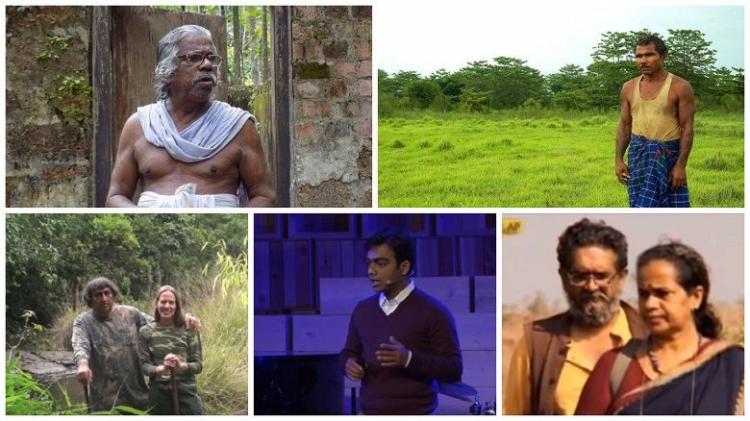
(c) The News Minute

 The efforts of these people as well as the natural advantage have helped ensure that India is among the Top Ten Nations in the World with regard to Forest Cover as per the Ministry of Environment, Forest and Climate Change report India State of Forest Report (ISFR) 2017 released last month. 

Overall mankind will benefit once we start valuing the tree and forests - transitioning from a hydrocarbon driven economy to a carbohydrate driven one would enable more equitable development, as mentioned by Dr. Ranil Senanayika, Sri Lankan proponent and pioneer of Analog Forestry at the 5th Asia Pacific Adaptation Network Forum in Colombo in October 2016.


More information on the benefits of urban forests in cities @ http://www.un.org/en/events/forestsday/

Mankind is selfish so let's put a price to our trees and forests: think of the value of the tree and forests - considering the cost of an oxygen cylinder - A human consumes oxygen worth Rs. 130,000 per day so the value of the oxygen producing plants, trees and forests are priceless. Save Forests!

Saturday, 3 March 2018

Protecting the Big Cats on World Wildlife Day 2018 and Beyond


March 3rd is #WorldWildlifeDay. It has been celebrated since 2013. The theme for 2018 is Protecting the Big Cats - the felid of the biological family felidae. There are 36 varieties of wild cats in the world. These apex predators of the land are most at risk wherever they occur and mankind preys on them leaving them endangered and on the verge of extinction.


We have lost many species - many to reckless hunting and poaching and the trend continues.
We loose #BigCats and #Wildlife to natural disasters as seen during the floods of Assam over the last few years.
We loose them to habitat destruction with increasing man-animal man-felid conflicts.
But most of all we loose them to poachers.

India is home to 8 types of felid:
  1. The Great India Lion;
  2. Our national animal the Royal Bengal Tiger; 
  3. The Snow Leopard;
  4. The Indian Leopard;
  5. The Jaguar;
  6. The Black Panther;
  7. The White Tiger
  8. The Clouded Leopard

Rohan Chakravarthy has done wonderful illustration of all of India's wildcat treasures.

On this #WWD18 if we can #DoOneThing it's being aware of the wildlife and biodiversity of our locality, city/town/village, district, state and nation and do our bit to work for it's conservation. They share our planet - and have as much right to it as us. There are many great institutions working round the clock to save our wildlife but it's each of our responsibility. Because they are all part of a fragile balanced eco-system that sustains the health of the planet. When this goes out of balance life as we know it will become a distant dream. Perhaps the only species the planet will thrive without is the human race!
So as long as we take up more than our rightful place in the sun let's at least work to make it safer for our wild planet-mates :)

Green Humour's Wildlife Map of India is a great place to build awareness of what's at stake.

Recently I was blessed to witness an Olive Ridley Sea Turtle hatchling swim off into the Bay of Bengal from my neighbourhood beach after years of seeing only dead turtles during the December-April nesting season. There is no greater joy that seeing wildlife survive!

Be it big cats or birds, sea turtles or chipmunks we share space with miracles and we need to work to ensure their continued survival.

Saturday, 3 February 2018

10 Reasons India Needs Energy Democracy

What is Energy Security?
 "Energy security is the association between national security and the availability of natural resources for energy consumption." - Wikipedia

What is Energy Democracy

“Energy democracy means that everybody is ensured access to sufficient energy. Energy production must thereby neither pollute the environment nor harm people. … this means that fossil fuel resources must be left in the ground, the means of production need to be socialised and democratised, and we must rethink our overall attitude towards energy consumption.”
  
Why does Energy Democracy matter in a developing country like India.
Because it will address 
(1) Income inequality: We are one the top wealthiest nations but are home to a third of the world's poor!
According to the New World Wealth report India is one of the top 10 wealthiest nations of the world with a total wealth of $8,230 billion. India is now the 6th richest country in the world. Yet our poor are poorer than ever before. Yet according to World Bank: 224 million live below the poverty line - that's existing on less that $1.90 per day!

(2) Power imbalance: 
Inadequate grid and severe power deficits everywhere - lack of functional grid electricity in rural Bharat and power cuts and load shedding in urban India. 


 (3) Improve our performance in the Environmental Performance Index: 
 India now ranks No. 177 out of 180 countries in the Environmental Performance Index,  with the fast-tracking of environmental clearances to improve our standing in the Ease of Doing Business rankings! 


(4) Our commitments to the Paris Agreement:
By curbing our increasing GHG emissions as committed in the Paris Climate Treaty that we signed and ratified


(5) India's air pollution crises: 


(6) India's soaring fossil fuel prices & the tax burden on the common man because of the dependence on petrol and diesel.


(7) The disruption of thermal power stations & nuclear power facilities 
The  protests against the Kudankulam Nuclear Power Plant, in Tirunelveli district which is the single largest nuclear power station in India and the continued fears of the local communities and visible effect on the Ennore Creek as a result of the dumping of fly ash from the nearby thermal power station instigated Magsaysay award winning singer T.M. Krishna to record the Chennai Poromboke Padal.

(8) The need for LPG and the subsidy burden 


(9) The disruption of coal mining


(10) The disruption of mega-dam projects on local communities
 The 32-odd year struggle of the Narmada Bachao Andolan (NBA) shows what a devastating blow a dam project that could solve the irrigation and power problem of states do to the local communities. This region still benefits only from the NBA run Jeevan Shalas as government schools exist in this locality only in paper.


Universal access to renewable, sustainable and local energy as well as ensuring job creation in the green energy sector that ensures fair pay and living wages to employees can elevate millions from the poverty trap. The conditions to decentralize energy and involve the community in the profits of energy generations makes this India’s moment in the sun. It remains to be seen whether the model becomes mass action!

Wednesday, 31 January 2018

Showcasing 'Solar' Suresh's Green Home Innovations


"Help the government go green....Do you look at ROI for the TV, washing machine, car...then why worry about figuring out the ROI in setting up solar panels in your home [but yes there is a 6%-8% return on investment]? It's not about generating electricity, or biogas or even usable organic manure - it's about ensuring health ... of us, our environment and by convincing others ensuring a healthy and sustainable society."
 - Solar Suresh, Chennai's Climate Hero and One Man Green Army

He is very clear he is a layperson not a green tech but he has the will to adopt these innovations at any price with extra effort. The will to change to benefit our environment is what is essential. He now is a facilitator for others to go green! He is a star alumnus of IIM-Ahmadabad and IIT-Madras - MBA and B.E.

The Centre for Science and Environment's #CSE publication has summarized Chennai's D. Suresh, the resident of Kilpauk's efforts very succinctly in this short video: 
https://www.youtube.com/watch?v=yBvZeecN8Ok

Net-metering through an on-grid solar power system has been functioning in Mr Suresh's Kilpauk home for two years now. Today it will cost about Rs, 70,000/- to install. He also has an off-grid
An off-grid battery solar power system (1KWh system which can power a home) costs about Rs. 1,20,000/- today - this can function as an inverter/back-up for a net-metered on-grid solar power system in city homes for the disadvantage of the the on-grid system is the fact that it looses power when there is current cut/power shutdown/load-shedding.

His home runs on 3KWH panels that even take on airconditioning.

He aims to set up a sewage treatment plant (STP) to reuse the recycled water for gardening and the flushes.
Solar Suresh is also keen to adopt the Israeli water-from-air system, where the indigenous Akash Ganga failed despite community support, the water harvesting techniques from rain-starved Israel work well. A working model is at Connought Place in the capital city.

This water-from-air system can provide employment and deal with the potable water crisis while reducing the market for plastic packets of water and bottled water!

He adopted solar power 6 yrs ago: He hasn't experienced a power cut in these six years
He even had power when the city reeled under the Chennai Rains of November-December 2015 and Cyclone Vardah the following year.

Innovations In Use

  •  3KWH solar panels 
  • Off grid and On grid systems
  • He has been harvesting rainwater for two decades now using the simplest sedimentation system and a good network of pipes with his terrace are the clean catchment area 20 years
  • His Kitchen garden yields nutritious produce and saves on the family's grocery bill too all the while utilizing the biogas byproduct and ensuring net zero waste from his kitchen - A true closed system!
  • Mini forest  to shield his home from the street traffic pollution and noise and give him privacy from neighboring apartments!

How are the green innovations he's adopted helping?

  1. Saving foreign exchange
  2. Reducing his carbon footprint
  3. Contributing to lowering GHG emissions - with his home and 30 places he has set up and the green movement he is inspiring with footfall of over 2000 people visiting him to see his green home and talks locally, nationally and internationally. 
  4. Reducing the demand for LPG subsidy
  5. Saving planet and preventing use of fossil fuels
  6. These initiative improve health. 
  7. Contribute to solid waste management
  8. Reduce mosquito breeding sites through stopping flooding around his home and organic garbage in and around his home. 
  9. Saves water - his well has water at 5 meters below ground
  10. His green cover improves air quality.


Bio gas plant - modified gobbar gas plant fed exclusively by kitchen waste for the urban setting. 


Harvesting rainwater for 2 decades long before it became compulsory. Inspired by practices in his days in Gujarat where large vessels were placed in courtyards and terrace to collect rainwater.
 Mini-biogas system
Mr. D. Suresh's vibrant terrace vegetable garden nourished by the biogas plant slurry!

The entire Suresh clan set a high bar. His wife Dr. Jayashri Suresh has helped set up many educational institutions and serves as advisor to others and is now helping set up an innovative and  holistic PG Certificate in Education a teacher's training course for the DAV group of institutions  - Guru Shikshanam.
More details can be sought via email: guru.shikshanam@davchennai.org

His son and daughter-in-law, Sujay and Innu both graduates of the prestigious ISB head a design start-up in Bangalore: Zwende.com with a store in Indira Nagar.


A product from Zwende.com - Kalamkari-faux leather bag

Monday, 25 December 2017

SOIL AND FARMERS: KEY TO CLIMATE ACTION

December sees the celebration of Soil and the Farmer. Both are key in the fight against climate change and are essential for efficient climate action. 


 World Soil Day, initiated by the Food and Agriculture Organization, is observed on December 5th annually and the 2017 theme was

‘Caring for the Planet starts from the Ground’

Kisan Diwas or National Farmers’ Day is an  Indian celebration observed on December 23rd in honor of  the birth anniversary of the fifth Indian prime minister and leader of farmers, late Chaudhary Charan Singh. Jai Jawan, Jai Kisan is the nationalist cry and the farmer is the backbone of the Indian economy especially the rural sector which still employs a majority of Indians. Plagued by financial crises as well as climate change--exacerbated extreme weather the Indian farmer faces many challenges. With a majority of them being small-holders their livelihood which feeds the nation is fraught with financial and climate risks. 


By training Indian farmers - targeting especially small-hold farmers and women farmers - to go back to and readopt organic soil management  techniques could help reverse GHG emissions as well as bringing extra income through organic certification. The key is to link these producers to a market for their produce and ensure adequate profits go directly to the farmer. The social entrepreneurs Vishnu Vardhan and Divya Shetty of Indian Superheroes (ISH), who I had the privilege to meet and hear at the #GES2017 parallel event at IIT Madras on November 28th are making this happen. This bootstrapped initiative based out of Coimbatore is slowly convincing farmers to go organic and ensuring adequate revenue streams for them. A third or their 800-odd network of organic farmers are women. They even allow urbanites to "rent patches of organic farms to grow and harvest your own crops!" IRL Farmville a great way to generate interest and networks for organic farmers beyond the organic store. Kudos to Divya Shetty and her team.  

As Vandana Siva repeatedly emphasizes empowering our farmers and returning to organic farming and soil management can trap current carbon emissions in just three years and reverse adverse affects.
As we face the challenges of soil erosion as well as desertification, the solution is soil management by farmers. The sheer number of Indian farmers - if harnessed into the organic green revolution and soil protection movement could be the most efficient climate action.


Combating the devastation of soil erosion, desertification, flood-drought cycles, undependable monsoons, and avoid the trap of expensive pesticides and chemical fertilizers can save the farmer as well as the planet. Organic farming and soil management if adopted on a large scale will make a big difference in combating climate change and carbon emissions.